What Is Radon Testing in Property Inspection?
Radon testing is the process of measuring radon gas levels inside a property using specialized detectors. It helps identify whether radioactive gas is entering the building through construction gaps, foundations, or slabs, posing long-term health risks to occupants.
Radon Testing in Dubai Properties: What Homeowners and Buyers Must Know
When buying or living in a property in Dubai, most people assume that a modern building automatically means a safe building. While Dubai properties are known for high construction standards, some of the most serious risks are invisible and often overlooked.
One such risk is radon gas.
Radon testing in Dubai properties is still not widely discussed, yet it plays a crucial role in health protection, construction quality assessment, and professional property inspection. This guide explains what radon is, why it matters in Dubai, and when homeowners and buyers should insist on radon testing as part of a property inspection.
What Is Radon Gas?
Radon is a naturally occurring radioactive gas released from soil and rock beneath buildings. Outdoors, it disperses safely. Indoors, especially in tightly sealed homes, it can accumulate to dangerous levels.
Why Radon Is Dangerous
- Colorless, odorless, tasteless
- Cannot be detected without instruments
- Long-term exposure is linked to lung cancer
- Affects both smokers and non-smokers
Radon is considered one of the leading environmental health risks inside homes worldwide.
Does Radon Exist in Dubai?
Yes. Radon exists everywhere in the world, including the UAE.
While Dubai is not classified as a high-radon region, localized conditions can still lead to elevated indoor radon levels, especially in:
- Villas
- Ground-floor apartments
- Homes with basements
- Properties built on filled or reclaimed land
- Poorly ventilated structures
Radon risk depends more on construction method and sealing quality than geographic location alone.
Why Radon Testing Matters in Dubai Properties

Dubai properties are designed to be:
- Airtight
- Energy efficient
- Highly insulated
While this improves cooling efficiency, it can trap gases inside if radon enters through the foundation.
Common Construction Paths for Radon Entry
- Cracks in concrete slabs
- Expansion joints
- Gaps around plumbing and service pipes
- Drainage connections
- Poorly sealed foundations
Radon presence often indicates construction or sealing deficiencies, making it relevant to professional property inspections.
When Should You Get Radon Testing in Dubai?
Radon testing is not required for every property, but it is strongly recommended in specific situations.
Recommended Scenarios
- Pre-handover property inspection
- During the Defects Liability Period (DLP)
- Before moving into a new villa or townhouse
- When buying a ground-floor apartment
- After renovation or structural modification
- If ventilation feels inadequate
Testing early allows construction-related issues to be addressed before responsibility shifts to the owner.
Radon Testing vs Standard Property Inspection
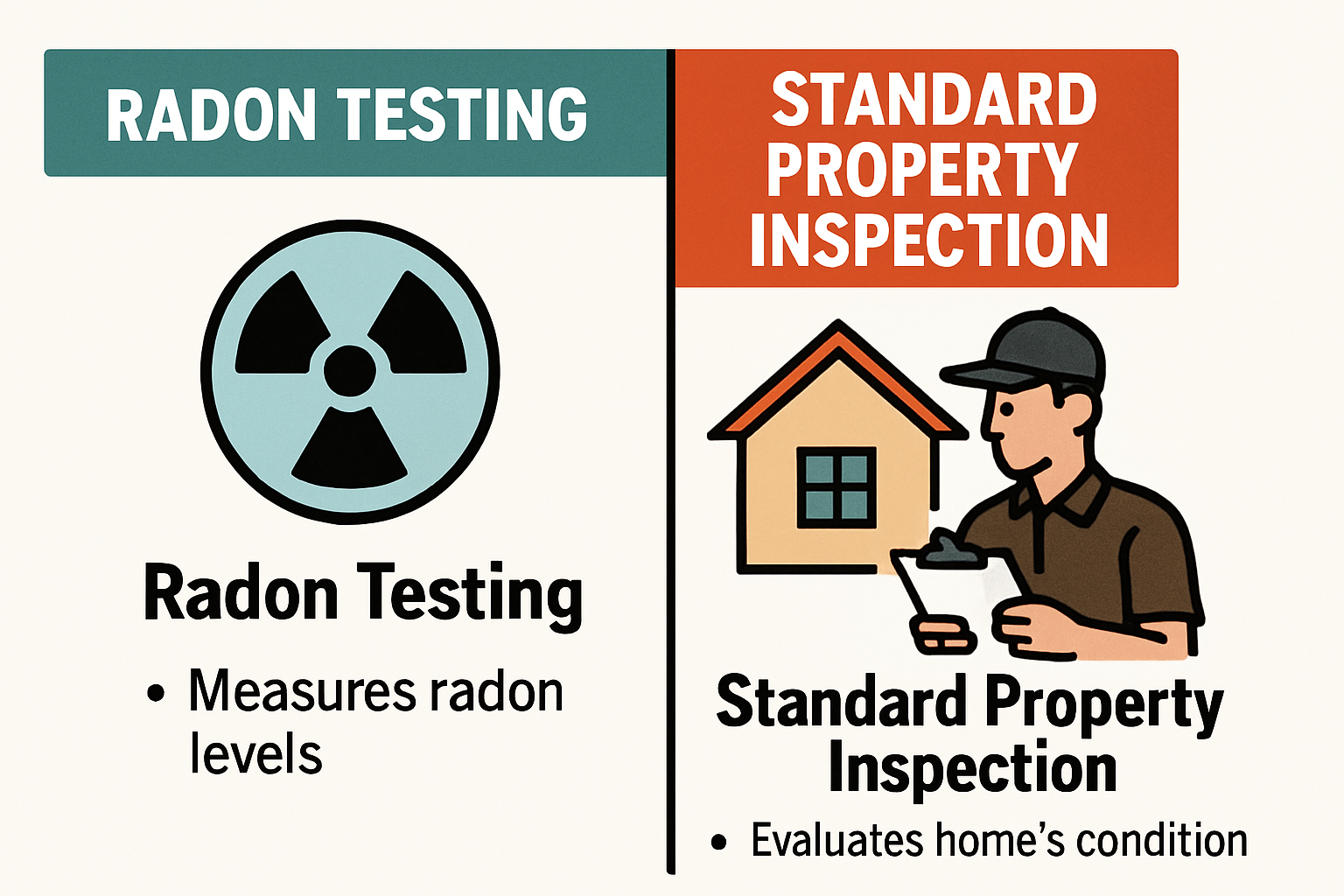
A standard property inspection focuses on:
- Visible workmanship
- Mechanical and electrical functionality
- Finishes and alignment
Radon testing focuses on:
- Indoor air quality
- Foundation integrity
- Sub-slab gas movement
- Long-term health safety
Without radon testing, a property inspection may be visually perfect but environmentally unsafe.
How Radon Testing Is Conducted During Inspection
Professional radon testing is methodical and data-driven.
Step-by-Step Process
- Property risk assessment (type, level, usage)
- Placement of calibrated radon detectors
- Monitoring over a defined exposure period
- Data analysis and interpretation
- Identification of potential entry points
- Clear reporting with recommendations
Results are documented as part of a professional inspection report, not just raw readings.
Radon Testing and the DLP Period in Dubai
Why DLP Timing Is Critical
The Defects Liability Period allows owners to report construction-related issues for rectification.
Radon-related findings often point to:
- Inadequate slab sealing
- Missing vapor barriers
- Construction gaps
- Poor workmanship at foundation level
When identified during DLP, developers may be required to rectify the issue, avoiding costly fixes later.
What Happens If High Radon Levels Are Found?
High radon levels do not mean the property is unusable.
Common Mitigation Measures
- Sealing slab and joint cracks
- Improving under-slab ventilation
- Enhancing mechanical ventilation
- Installing radon mitigation systems (if required)
Early detection ensures simple, cost-effective solutions rather than major post-occupancy interventions.
Common Misconceptions About Radon in Dubai
“Radon is not a UAE issue.”
Radon exists worldwide and depends on construction quality.
“New homes don’t have radon.”
New airtight homes can trap radon more efficiently.
“If no one feels sick, it’s fine.”
Radon effects are long-term and silent.
“Visual inspection is enough.”
Radon cannot be seen or smelled.
Why Professional Radon Testing Matters
DIY kits or informal checks often lack:
- Calibration accuracy
- Proper exposure duration
- Professional interpretation
- Actionable construction insight
Professional radon testing ensures:
- Accurate measurement
- Clear risk assessment
- Construction-linked findings
- Reliable documentation for developers or buyers
Final Thoughts: Radon Testing Is Preventive, Not Optional
Radon testing in Dubai properties is not about fear — it’s about informed ownership and responsible inspection.
A property can look flawless yet still expose occupants to hidden health risks. Including radon testing as part of a professional property inspection ensures peace of mind, health protection, and long-term property value.
