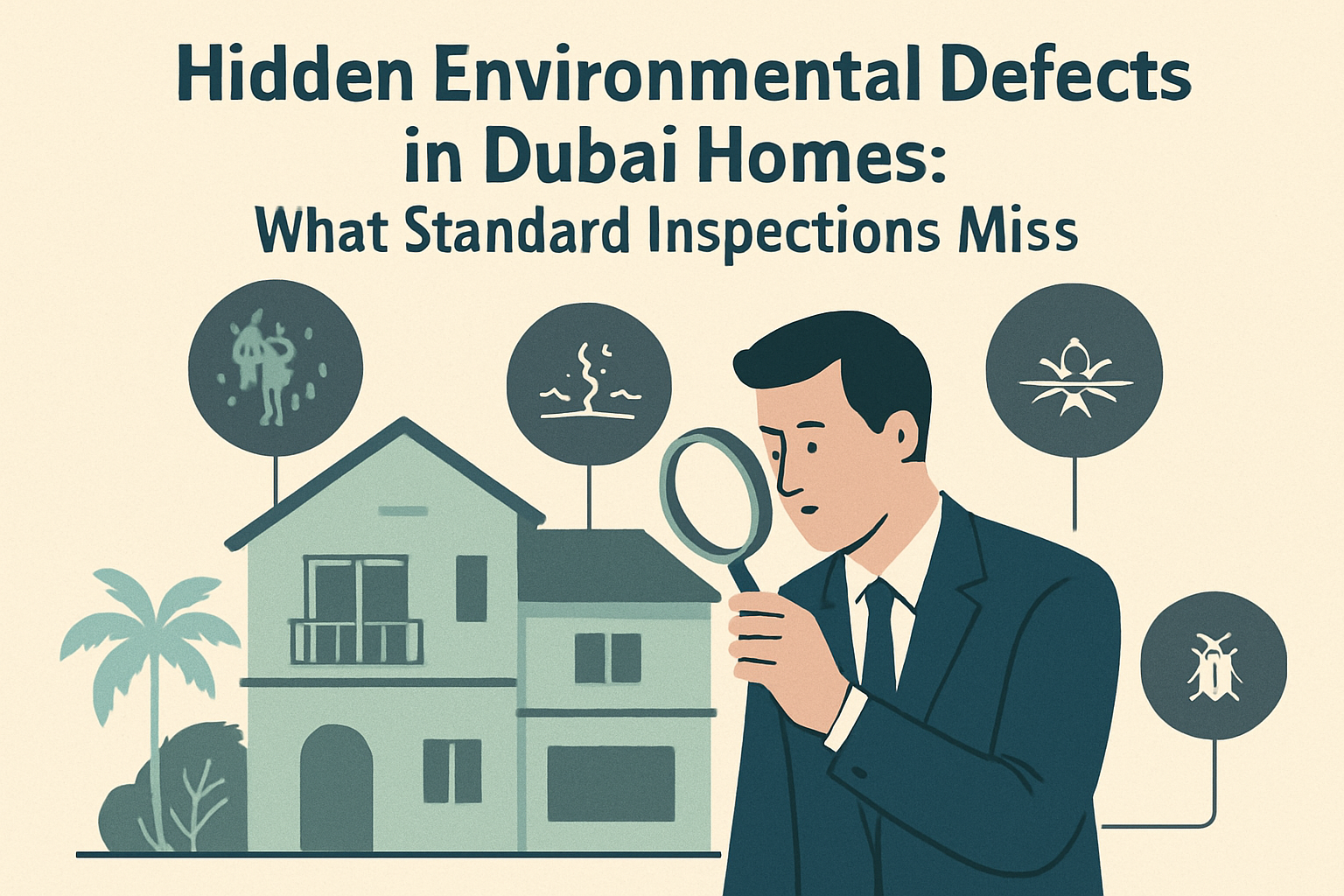
What Are Hidden Environmental Defects in Homes?
Hidden environmental defects are invisible issues such as radon gas, poor indoor air quality, trapped moisture vapor, and inadequate ventilation that affect health and building performance. These defects are often missed during standard property inspections because they require specialized testing and expertise.
Hidden Environmental Defects in Dubai Homes: What Standard Inspections Miss
Most property inspections in Dubai focus on what can be seen, touched, and tested quickly — tiles, paint, electrical points, plumbing pressure, and finishing quality. While these checks are important, they only scratch the surface of a property’s true condition.
Some of the most serious defects in Dubai homes are environmental, invisible, and long-term. These issues often go unnoticed during standard inspections, yet they can directly affect health, comfort, and long-term property value.
This guide explains the hidden environmental defects common in Dubai properties, why basic inspections miss them, and how professional property inspections uncover risks others overlook.
Why Environmental Defects Are Often Overlooked in Dubai Properties
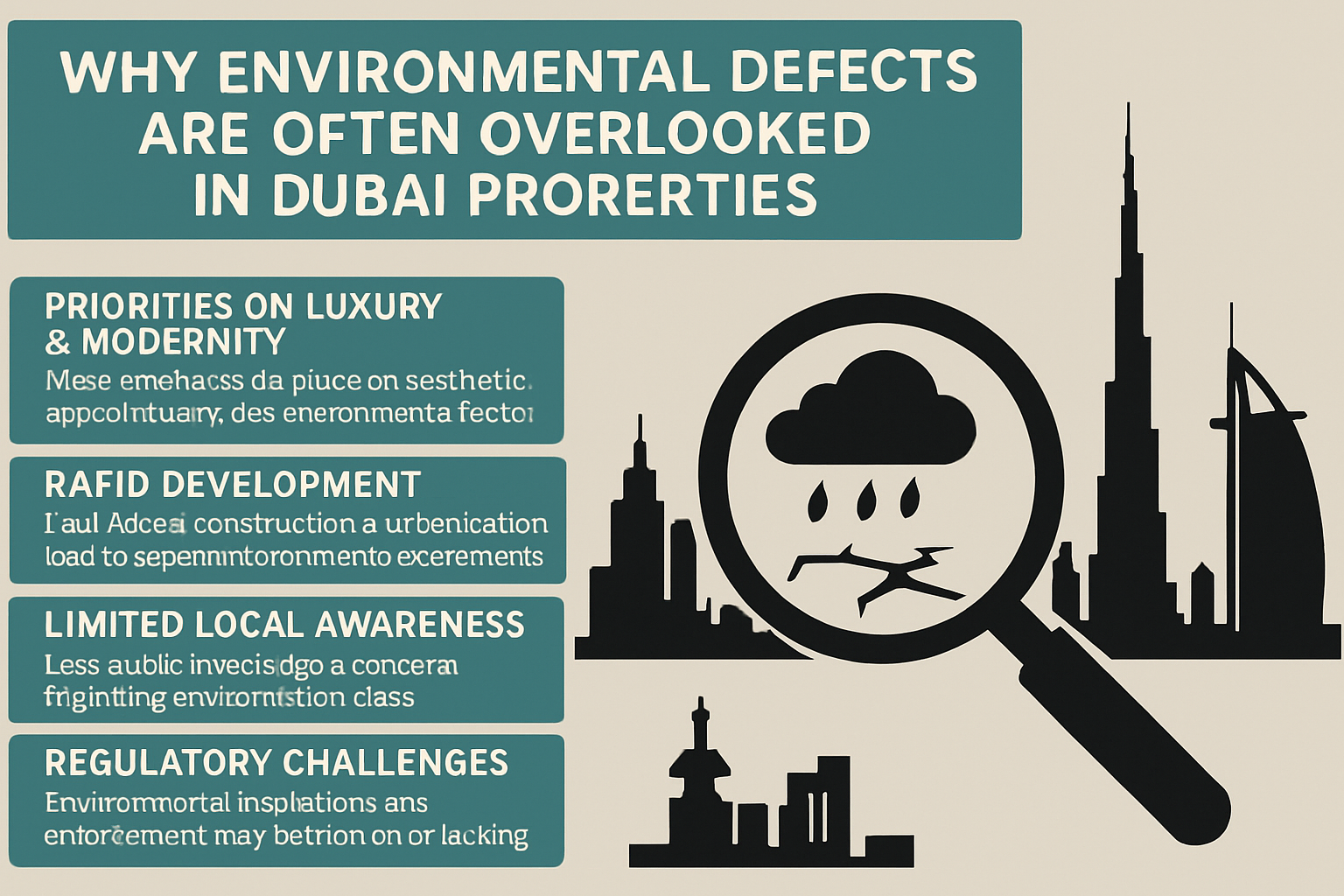
Dubai buildings are typically:
- Visually modern
- Well-finished
- Newly constructed
- Airtight for energy efficiency
These characteristics can mask deeper environmental problems, especially when inspections rely only on visual checks.
Why Standard Inspections Miss Them
- No visible warning signs
- No immediate symptoms for occupants
- Require specialized equipment
- Need longer assessment time
- Often misunderstood as “non-structural”
As a result, properties can pass inspection while still posing long-term health or comfort risks.
1. Radon Gas – The Most Overlooked Indoor Hazard
Radon is a naturally occurring radioactive gas that enters homes through:
- Concrete slabs
- Foundation cracks
- Expansion joints
- Pipe penetrations
Why Radon Is Dangerous
- Invisible and odorless
- Cannot be detected without testing
- Long-term exposure linked to lung cancer
- Affects both smokers and non-smokers
In Dubai, radon risk is influenced more by construction quality and sealing than geography. Villas, townhouses, and ground-floor apartments are particularly vulnerable.
2. Poor Indoor Air Quality (IAQ)
Many Dubai homes are sealed tightly to retain cool air. Without proper ventilation design, this can lead to stagnant indoor air.
Common IAQ Issues
- Accumulation of indoor pollutants
- Reduced oxygen exchange
- Trapped gases and odors
- Discomfort, headaches, fatigue
Poor IAQ doesn’t show up on walls or ceilings — but it directly affects daily living quality.
3. Trapped Moisture Vapor and Condensation
Moisture issues in Dubai properties don’t always appear as visible leaks.
Hidden Moisture Problems Include
- Vapor trapped behind walls
- Condensation under tiles
- Moisture beneath flooring systems
- Poorly insulated slabs
Over time, trapped moisture can lead to:
- Mold growth
- Material deterioration
- Unpleasant odors
- Long-term structural damage
Standard inspections often miss this because surfaces appear dry.
4. Mold Risk Without Visible Mold
Mold does not always appear as black spots on walls.
Early-Stage Mold Conditions
- High humidity behind finishes
- Condensation in cavities
- Inadequate airflow
- Cold surface bridging
By the time mold becomes visible, damage is already advanced. Environmental inspection identifies risk conditions early.
5. Inadequate Ventilation Design
Ventilation defects are common in:
- Bathrooms
- Kitchens
- Storage areas
- Closed bedrooms
- Maid’s rooms
Signs of Ventilation Defects
- Persistent humidity
- Condensation on windows
- Stale air
- Odors that don’t dissipate
These are design and execution issues, not user behavior problems — and they affect long-term livability.
6. Sub-Slab and Foundation Deficiencies
What’s beneath the floor is rarely inspected — yet it’s one of the most critical areas.
Common Hidden Issues
- Poor slab sealing
- Missing vapor barriers
- Gas migration pathways
- Improper ground preparation
These defects contribute to radon entry, moisture issues, and long-term slab deterioration.
Why Standard Inspections Don’t Detect These Defects
Standard inspections focus on:
- Visual condition
- Functionality
- Surface-level compliance
Hidden environmental defects require:
- Measurement tools
- Environmental testing
- Building science knowledge
- Time-based assessment
Without these, inspections may be technically correct but practically incomplete.
How Professional Property Inspection Uncovers Hidden Environmental Defects
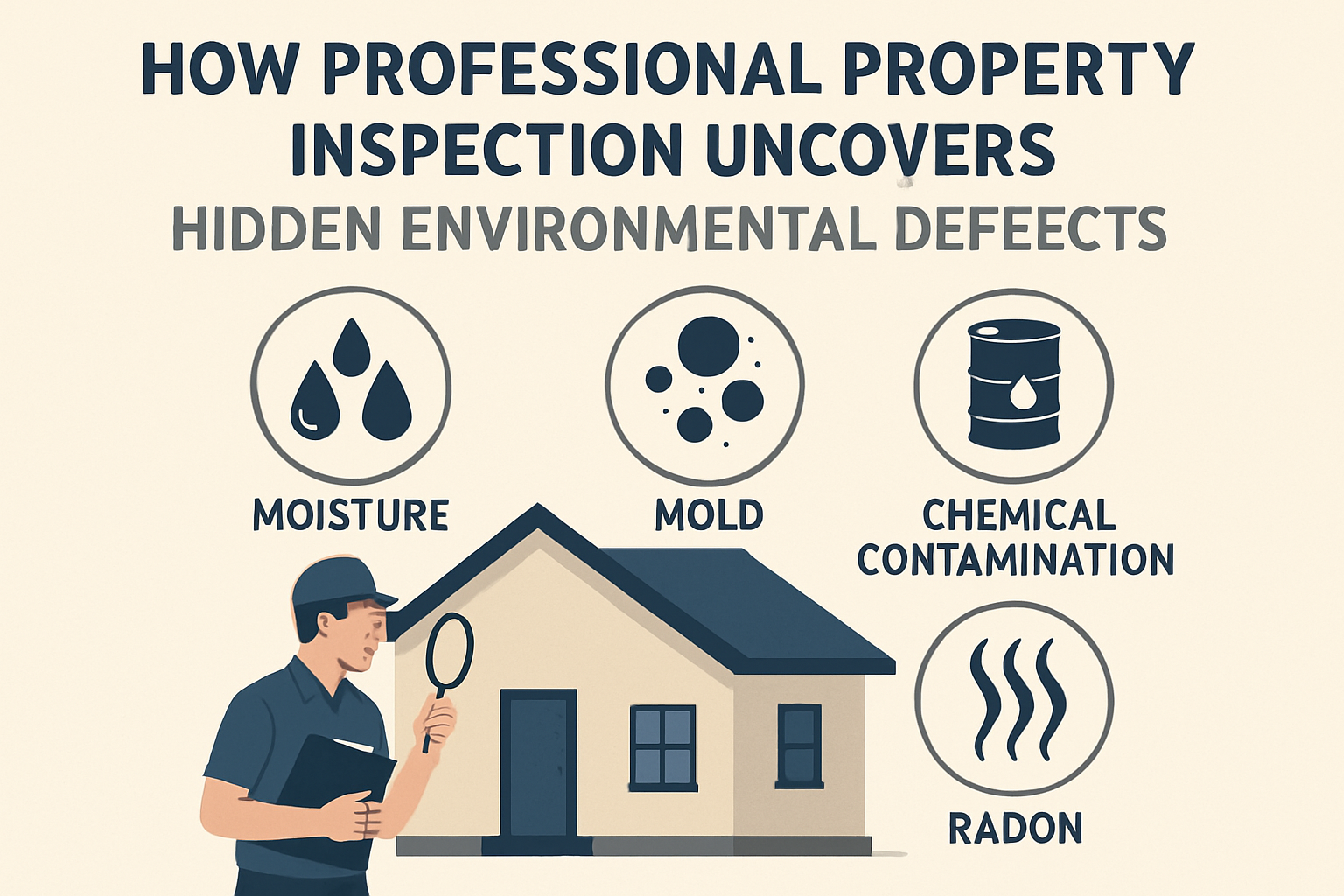
A professional inspection approach goes beyond appearance.
Advanced Inspection Methods Include
- Radon testing
- Indoor air quality assessment
- Moisture detection tools
- Ventilation evaluation
- Building envelope analysis
- Risk-based reporting
These findings are documented clearly and linked to construction quality, design execution, and long-term risk.
Why These Defects Matter During DLP in Dubai
Environmental defects often originate from:
- Construction gaps
- Design shortcomings
- Poor execution
- Missing protective layers
When identified during the Defects Liability Period (DLP):
- Responsibility remains with the developer
- Rectification can be demanded
- Long-term costs are avoided
After DLP, the same issues become owner-funded problems.
Who Should Be Most Concerned?
Environmental inspection is especially important for:
- New homeowners
- Families with children
- Elderly occupants
- Asthma or allergy sufferers
- Villa and townhouse buyers
- Ground-floor apartment owners
If health, comfort, and longevity matter — these inspections are essential.
Final Thoughts: A Property Can Look Perfect and Still Be Unsafe
Hidden environmental defects don’t affect aesthetics — they affect health, comfort, and long-term property performance.
A visually flawless property can still:
- Trap harmful gases
- Retain excess moisture
- Circulate poor-quality air
- Create future health risks
Professional property inspection in Dubai is not just about spotting cracks — it’s about protecting people.
