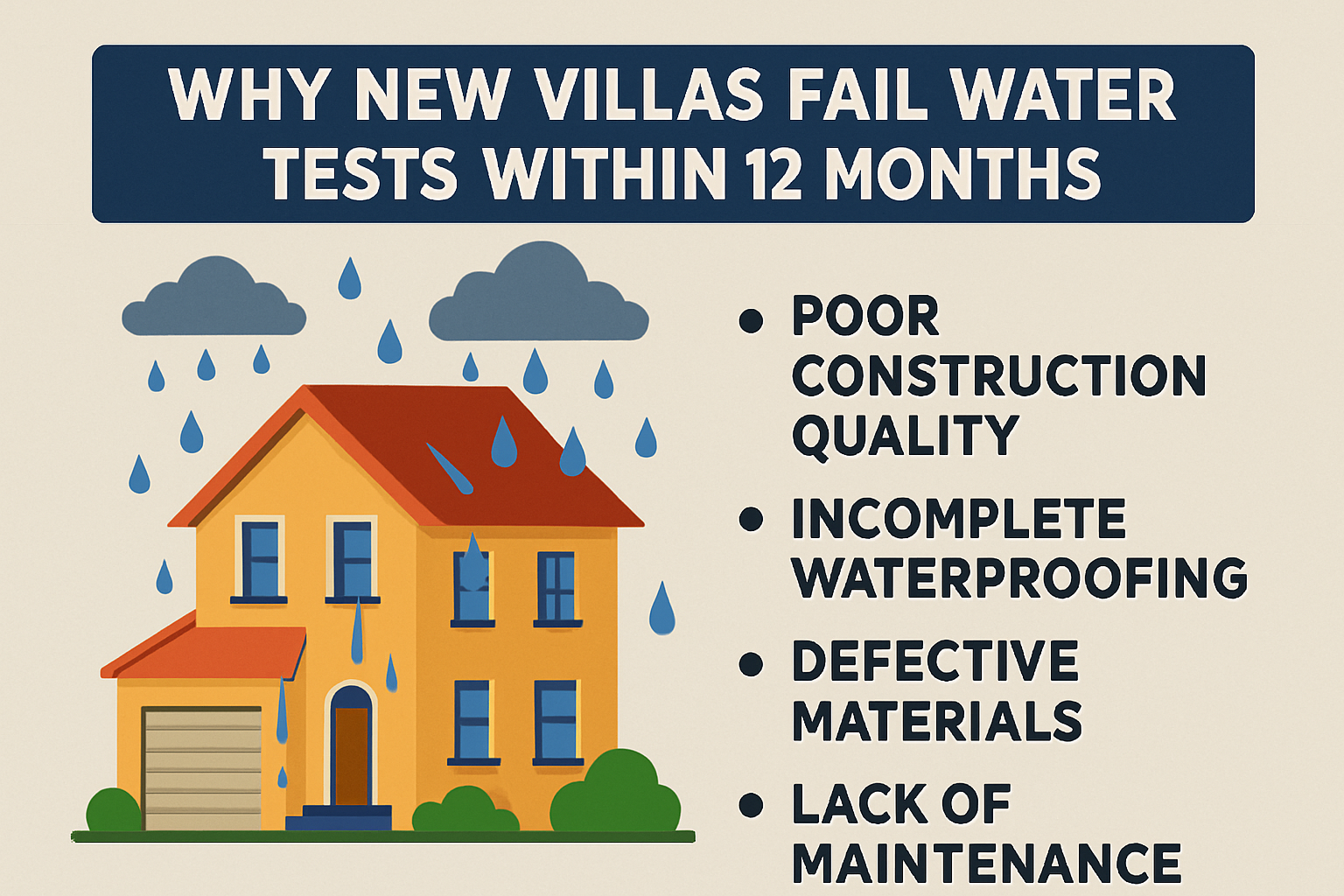
Buying a brand-new villa in Dubai comes with a common assumption:
“Everything is new, so water leakage won’t be an issue.”
Yet in reality, a large number of new villas fail water tests within the first 6 to 12 months after handover. These failures are not random — they are the direct result of construction practices, climate pressure, and missed defects during pre-handover inspections.
This article explains why new villas fail water tests, where the failures usually occur, and how proper inspection during handover prevents costly post-handover damage.
What Does “Failing a Water Test” Mean?
A villa fails a water test when moisture or water penetration is detected in areas that should be fully protected, such as:
- Roof slabs
- Bathrooms and wet areas
- Balconies and terraces
- External walls
- Planter boxes
- Basement or service rooms
Failures are usually detected through:
- Moisture meter readings
- Thermal imaging
- Visual staining and paint bubbling
- Ceiling or wall dampness
- Musty odors
These issues often do not appear immediately at handover — they develop over time.
1. Rushed Waterproofing During Construction
One of the main reasons new villas fail water tests is rushed waterproofing installation.
In many projects:
- Waterproofing membranes are applied under tight deadlines
- Curing times are reduced or ignored
- Overlapping joints are not sealed properly
- Protection layers are damaged by other trades
Waterproofing is often treated as a hidden task — once covered by tiles or screed, defects become invisible until leakage appears.
2. Improper Slope & Drainage Design
Even with correct waterproofing materials, poor slope execution leads to water retention.
Common issues include:
- Flat balconies without proper falls
- Water pooling near door thresholds
- Incorrect drain positioning
- Blocked or undersized floor traps
Standing water increases pressure on membranes, causing early failure — especially in Dubai’s heat.
3. Bathroom Waterproofing Errors
Bathrooms are one of the most frequent failure points in new villas.
Typical defects:
- Waterproofing not extended behind wall tiles
- Missing membrane under bathtubs or shower trays
- Poor sealing around floor drains
- No upturn at wall corners
These defects may take months to show, often leaking into:
- Adjacent bedrooms
- Living room ceilings
- Staircase walls
4. Planter Boxes & External Features
Decorative elements are a major risk factor.
Planter boxes frequently fail due to:
- No root barrier installation
- Inadequate drainage layers
- Direct contact between soil and structure
- Poor waterproofing detailing
Water slowly seeps into slabs and walls, causing long-term structural moisture damage.
5. Roof Waterproofing Exposed to Extreme Heat
Dubai’s climate plays a major role.
Roof membranes are exposed to:
- Extreme temperature fluctuation
- UV radiation
- Expansion and contraction
If:
- Incorrect membrane type is used
- Expansion joints are not detailed correctly
- Parapet wall joints are weak
The roof may fail within the first year — even without rainfall.
6. Incomplete or Skipped Water Testing Before Handover
Many villas are handed over without proper water testing.
Common issues:
- No flood test conducted in bathrooms
- No roof water testing
- No pressure testing of plumbing lines
- Tests done for minutes instead of hours
Without documented testing, defects remain undiscovered until after occupancy.
7. Movement & Settlement After Handover
New villas naturally undergo:
- Minor structural movement
- Thermal expansion
- Material shrinkage
If waterproofing is poorly detailed, even small movements cause cracks, gaps, and eventual leakage.
Why These Failures Appear Within 12 Months
Waterproofing defects usually surface within:
- First rainy season
- First full summer heat cycle
- First year of regular water usage
This timeline aligns exactly with:
- DLP expiration risk
- Warranty limitation disputes
- Developer responsibility cut-offs
Which is why early inspection is critical.
The Cost of Ignoring Early Water Test Failures
If water leakage is detected late, repair costs increase significantly:
- Tile removal and replacement
- Membrane reinstallation
- Ceiling and wall repairs
- Paint and finishing restoration
💰 Repair costs often range from AED 25,000 to AED 150,000+, depending on severity.
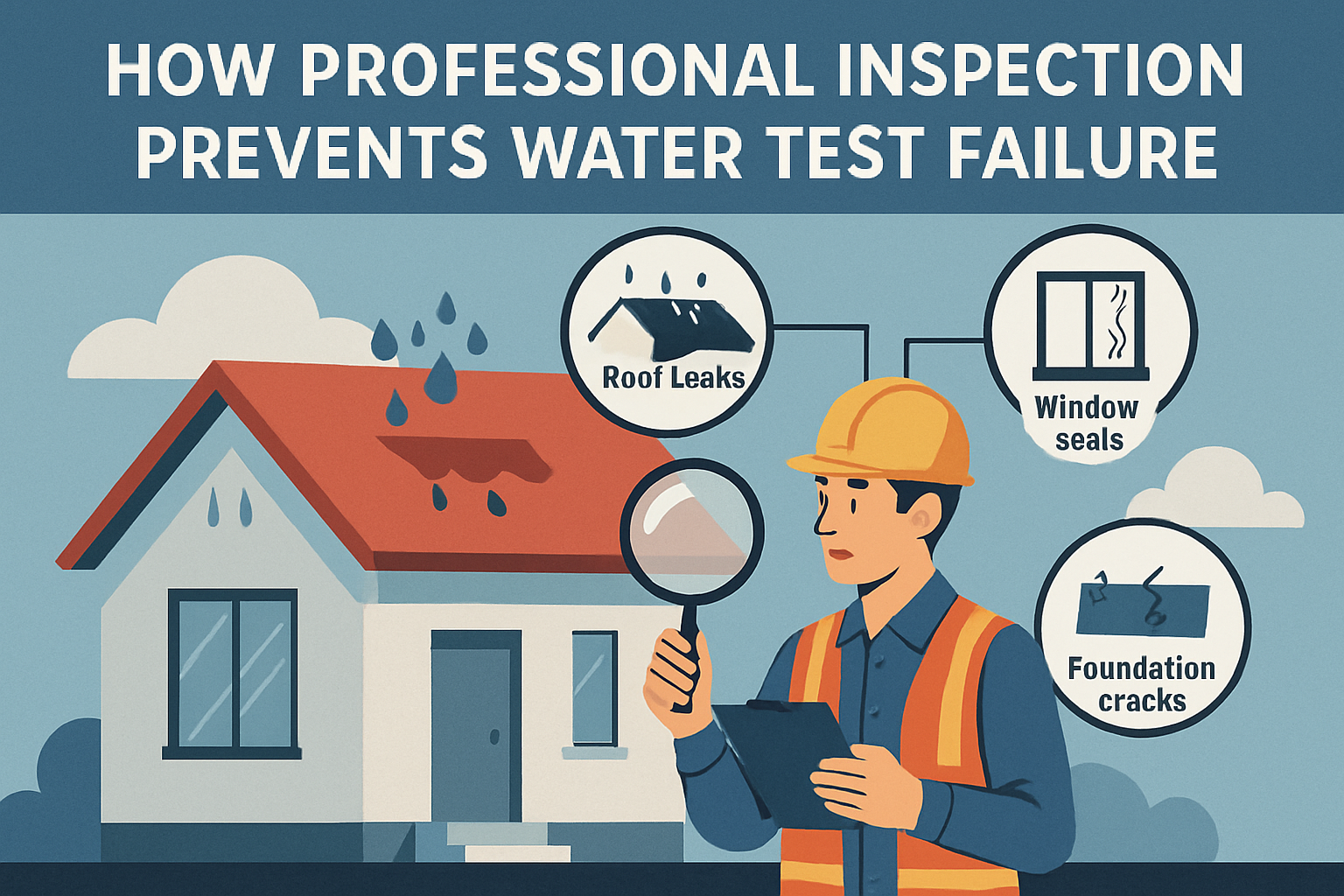
How Professional Inspection Prevents Water Test Failure
A professional villa inspection includes:
- Moisture detection before visible damage
- Thermal imaging of wet areas
- Drainage slope assessment
- Roof and parapet inspection
- Documentation for DLP claims
This allows owners to force rectification before liability shifts.
Why Water Testing Is Critical During Pre-Handover Inspection
A proper pre-handover inspection ensures:
- Waterproofing defects are documented early
- Developers cannot deny responsibility
- Repairs are completed before move-in
- Long-term structural protection
Skipping this step exposes owners to avoidable risk.
Final Thoughts
New villas don’t fail water tests because they are old —
they fail because hidden defects go undetected.
In Dubai’s climate, even minor waterproofing mistakes escalate quickly.
The first 12 months are the most critical period to identify and correct these issues.
A professional property inspection isn’t optional — it’s essential protection.
🔍 About Property Inspection Dubai
We are fully certified by DED, approved by RERA, and proudly InterNACHI-accredited — providing trusted, precise, and professional property inspections across the UAE.
