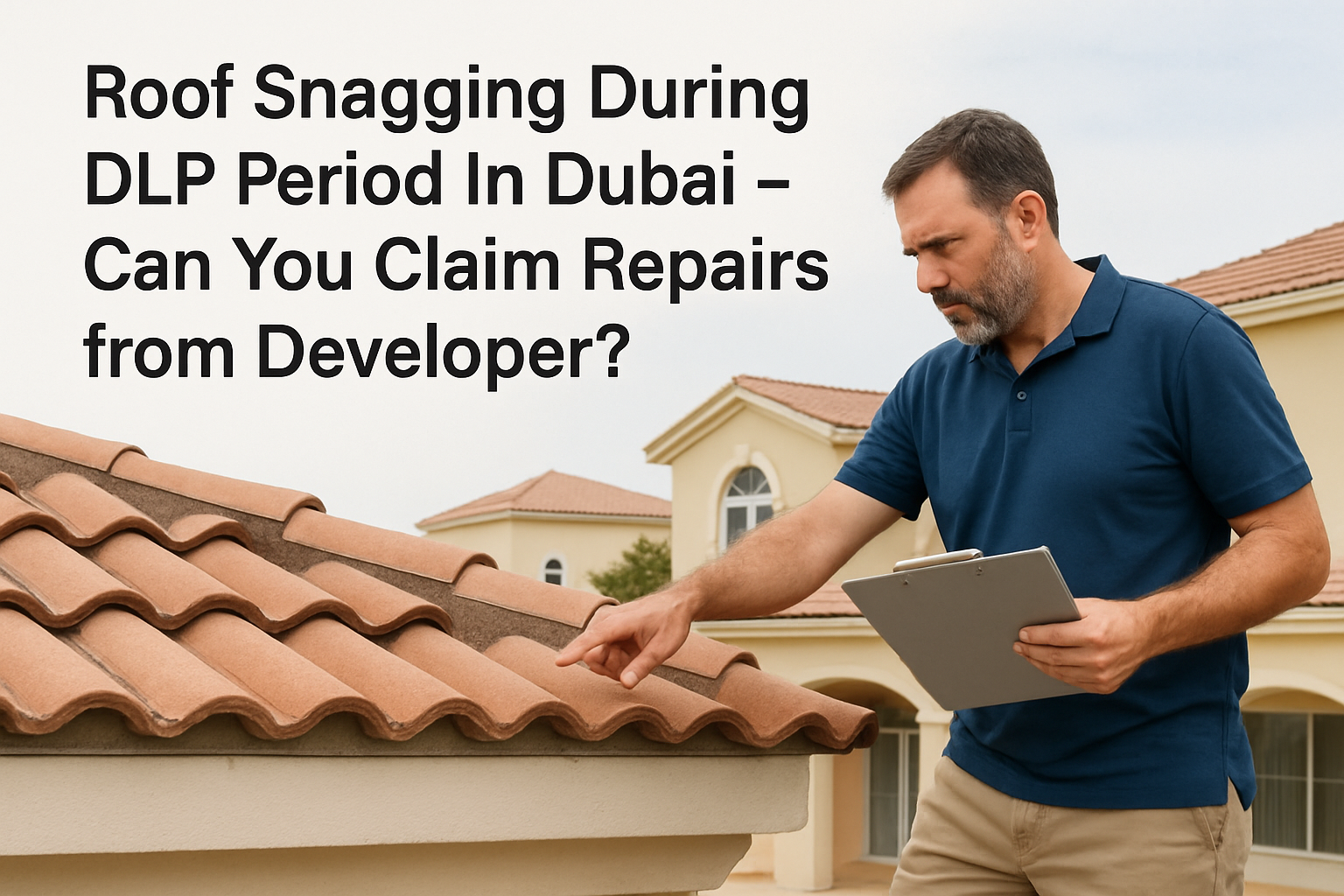
Roof Snagging During DLP Period in Dubai – Can You Claim Repairs from Developer?
Buying a new villa or apartment in Dubai is a major investment. Most homeowners assume that once the property is handed over, everything is in perfect condition. However, many construction defects only appear after the property has been occupied for a few months.
One of the most common areas where defects appear is the roof structure. Waterproofing failures, cracks, drainage issues, and sealing gaps can lead to water leakage and structural damage if they are not detected early.
Fortunately, Dubai property owners are protected by the Defects Liability Period (DLP). During this period, developers are responsible for repairing construction defects — including many roof-related issues.
This is where roof snagging during the DLP period becomes extremely important.
Professional property inspectors can identify hidden roof defects and help homeowners document them before the DLP expires.
What Is the DLP Period in Dubai Property?
The Defects Liability Period (DLP) is a timeframe after the property handover during which the developer is responsible for repairing construction defects.
In Dubai, the DLP period typically lasts:
- 12 months for apartments
- 12–24 months for villas (depending on developer)
During this time, developers must repair defects related to construction quality, installation errors, or material failure.
However, if defects are not reported before the DLP expires, homeowners may have to pay for repairs themselves.
Why Roof Snagging During the DLP Period Is Important
Roof defects often take time to appear. Problems may only become visible after exposure to:
- Heavy rain
- Extreme summer heat
- Thermal expansion
- Air conditioning condensation
If these issues are not identified early, they can cause:
- Ceiling water stains
- Mold growth
- Electrical hazards
- Structural deterioration
A professional roof snagging inspection during the DLP period ensures that all roof defects are identified while the developer is still responsible for repairs.
Common Roof Defects Found During DLP Inspections
During professional roof inspections in Dubai properties, inspectors frequently identify several common defects.
Waterproofing Failure
Waterproofing membranes protect the roof slab from water penetration. Poor installation can lead to:
- membrane separation
- blistering
- weak sealing at edges
- water seepage into ceilings
Waterproofing defects are one of the most serious issues because they can cause interior damage quickly.
Roof Drainage Problems
Flat roofs are common in Dubai villas and buildings. These roofs require proper slope to direct water toward drainage outlets.
During inspections, we often find:
- incorrect roof slope
- blocked roof drains
- poor drainage installation
- water ponding areas
Standing water weakens waterproofing layers and increases leakage risk.
Concrete Cracks on Roof Slabs
Temperature changes in Dubai cause thermal expansion in concrete surfaces.
This often results in:
- hairline cracks
- slab edge cracks
- expansion joint gaps
While some cracks are cosmetic, others can indicate structural stress or waterproofing failure.
AC Pipe and Service Penetration Gaps
Roof surfaces often contain several service penetrations including:
- air conditioning pipes
- electrical conduits
- duct openings
If these areas are not sealed properly, water can easily enter the structure during rainfall.
Parapet Wall Sealing Issues
The parapet wall sits at the edge of the roof slab and must be properly sealed.
During inspections we often find:
- silicone failure
- cracked corner joints
- poor flashing installation
- gaps between slab and wall
These defects become major leakage points over time.
Roof Issues Developers May Reject During DLP
While many roof defects are covered under the DLP, some claims may be rejected by developers if the damage is caused by external factors.
Examples include:
- damage from external contractors
- modifications made by the owner
- lack of maintenance
- physical impact damage
This is why professional documentation is essential when reporting roof defects.
How a Professional Inspection Report Helps Your Claim
When reporting defects to developers, homeowners must provide clear evidence of the issue.
A professional property inspection report includes:
- detailed defect descriptions
- high-resolution photos
- thermal imaging results
- moisture readings
- technical explanations of the defect
These reports help support your claim and increase the likelihood that the developer will approve repairs.
When Should You Schedule Roof Inspection During DLP?
The best time to schedule roof inspection is before the DLP period expires.
Experts recommend scheduling inspection:
- 3–4 months before DLP expiry
- after heavy rainfall
- when ceiling stains appear
- when moisture smell is detected indoors
Early inspection allows enough time to report defects and request developer repairs.
Why Choose Property Inspection Dubai?
Property Inspection Dubai provides professional property inspections for villas, apartments, and commercial buildings across the UAE.
Our inspection services include:
- roof inspections
- snagging inspections
- structural inspections
- waterproofing checks
- thermal imaging leak detection
Our inspectors use advanced diagnostic tools to identify hidden defects and provide detailed inspection reports for property owners.
We are fully certified by DED, approved by RERA, and proudly InterNACHI-accredited — providing trusted, precise, and professional snagging inspections across the UAE.
Final Thoughts
Roof defects can cause serious damage if they are ignored. Fortunately, the DLP period gives Dubai homeowners the opportunity to claim developer repairs for construction defects.
Scheduling a professional roof snagging inspection during the DLP period ensures that hidden issues are identified and documented before the warranty expires.
By acting early, property owners can avoid expensive repairs and protect their investment.
