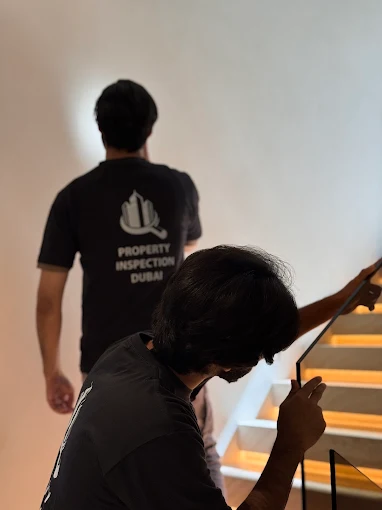
Walk into any newly handed-over property in Dubai and the walls look pristine. Fresh paint, clean edges, smooth surfaces. But look closer — and more importantly, look the way a certified property inspector looks — and the picture changes quickly.
Paint and wall finish defects are consistently among the top five most documented issues in Dubai property snagging reports. They are not cosmetic afterthoughts. In many cases they signal deeper problems: hollow plaster indicating bond failure, moisture staining masked by fresh emulsion, mismatched touch-up patches applied to cover surface cracks, and lap marks from rushed repainting schedules at the end of a construction project.
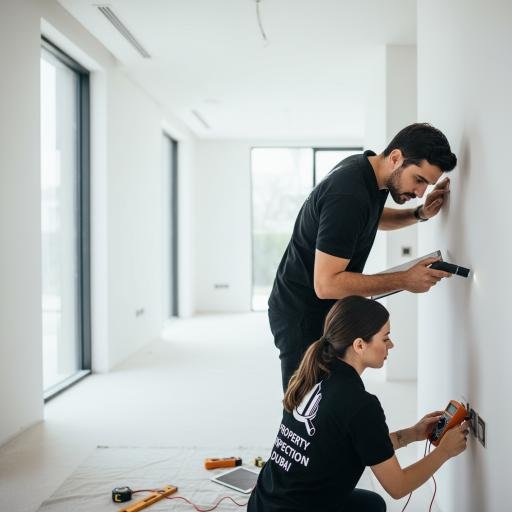
At Property Inspection Dubai, our certified inspectors are trained to evaluate paint quality and wall finishes not just visually but systematically — using raking light technique, tactile surface checks, and moisture scanning where staining patterns suggest underlying issues. This guide explains exactly what we look for, why it matters, and how identifying these defects before you sign your handover protects your investment.
Why Paint and Wall Finishes Matter More Than You Think
Most buyers focus on the big-ticket items — plumbing, AC, structure. Paint tends to be dismissed as easy to fix. The reality in Dubai’s construction environment is more nuanced.
Repainting a single room after handover sounds simple. In practice, it means living with dust and odour during what is already a stressful move-in period, coordinating with the developer’s maintenance team who may or may not be responsive, and in many cases discovering that matched paint has not been properly catalogued by the contractor, leaving you with a visible colour variance on any touched-up area. When defects are documented before handover, the developer is contractually obligated to rectify them using original materials before you receive your keys.
Beyond convenience, paint defects frequently indicate process failures during construction. Plaster applied without adequate curing time, primer coats skipped to meet deadlines, topcoats applied in high-humidity conditions, and sealers omitted on moisture-exposed areas — all of these are execution failures that show up in the finished surface and must be caught before the defect liability period (DLP) begins.
What Our Inspectors Look for in Paint and Wall Finishes
Surface Uniformity and Sheen Consistency
The first thing our inspectors assess is surface uniformity across each painted plane. Using a raking light technique — where a torch or strong sidelight is held at a low angle to the wall surface — any undulation, roller texture inconsistency, or lap mark becomes clearly visible. A correctly applied two-coat emulsion system should present a uniform finish with consistent sheen level across the entire surface.
Common failures include over-rolled areas where the nap of the roller has created a heavy orange-peel texture, under-rolled sections where thin coverage produces a streaky or patchy appearance, and tipping lines where wet paint edges have dried before the next pass was applied. These issues are often only visible under raking light and are entirely missed in standard daylight walk-throughs.
Colour Matching and Touch-Up Patches
One of the most consistently found defects in Dubai new-build properties is the visible touch-up patch. During the final weeks of construction, minor surface damage from trades working in a finished space is repaired with spot applications of paint. When this is done with paint from a different batch, or applied without feathering into the surrounding surface, it creates clearly visible patches under any angled light.
Our inspection documents every patch location with photographic evidence, distinguishing between acceptable minor touch-ups and unacceptable wide-area repaints that indicate the original surface was not adequately protected during construction.
Paint Adhesion and Film Integrity
Paint film adhesion is assessed by visual inspection of any areas showing flaking, peeling, chalking, or blistering. These conditions indicate that surface preparation was inadequate — either insufficient cleaning of the substrate, absence of a bonding primer, or application over contaminated or damp surfaces.
Blistering in particular is a critical finding. Bubbles or raised dome formations in the paint film indicate that moisture trapped beneath the film has expanded, often signalling that the substrate was not fully dry when painted. In Dubai’s climate, where construction proceeds through extreme heat and humidity, this is a common finding in properties handed over on aggressive timelines.
Plaster Finish Quality
Beneath every painted surface is a plaster substrate, and the quality of the plaster finish directly determines the quality of the finished painted wall. Our inspectors assess plaster for surface straightness using a straight edge, for hollow spots using sounding (a technique where the surface is tapped systematically to identify areas where the plaster has delaminated from the blockwork beneath), and for shrinkage cracks that have been filled and painted over.
Hollow plaster is a particularly important finding because it will eventually detach, taking the paint layer with it. When caught at inspection, the remediation is straightforward — the hollow section is removed and re-plastered. When missed, it becomes a post-move-in maintenance issue that is significantly more disruptive to resolve.
Moisture Staining and Paint Over Cracks
A critical part of our wall inspection is identifying areas where fresh paint has been used to conceal existing problems. Moisture staining shows through emulsion over time, but at handover it can be effectively hidden under a fresh topcoat. We use Protimeter moisture meters to scan wall surfaces for elevated moisture readings behind recently painted areas, particularly in locations vulnerable to water ingress — exterior walls, areas below windows, walls adjacent to bathrooms, and areas near drainage runs.
Similarly, we look for evidence of crack filling beneath fresh paint. A hairline crack filled with an inflexible filler and painted over will re-open with building movement. We look for slight surface depression or ridge lines running across flat wall surfaces that indicate underlying cracks that have been cosmetically addressed rather than properly treated.
Ceiling Finishes and Cornice Junctions
Ceilings receive separate attention in our inspection. Ceiling paint must be assessed for even coverage, absence of lap marks (which are especially visible under overhead lighting), and correct finish at cornice and bulkhead junctions. Gypsum cornice installations are checked for secure bonding, absence of cracks at joints, and clean mitred corners. Bulkhead soffits in kitchens and bathrooms are inspected for adequate paint coverage on internal faces, which are frequently missed during application.
A Real Example: Interior Finishes in a New Dubai Apartment
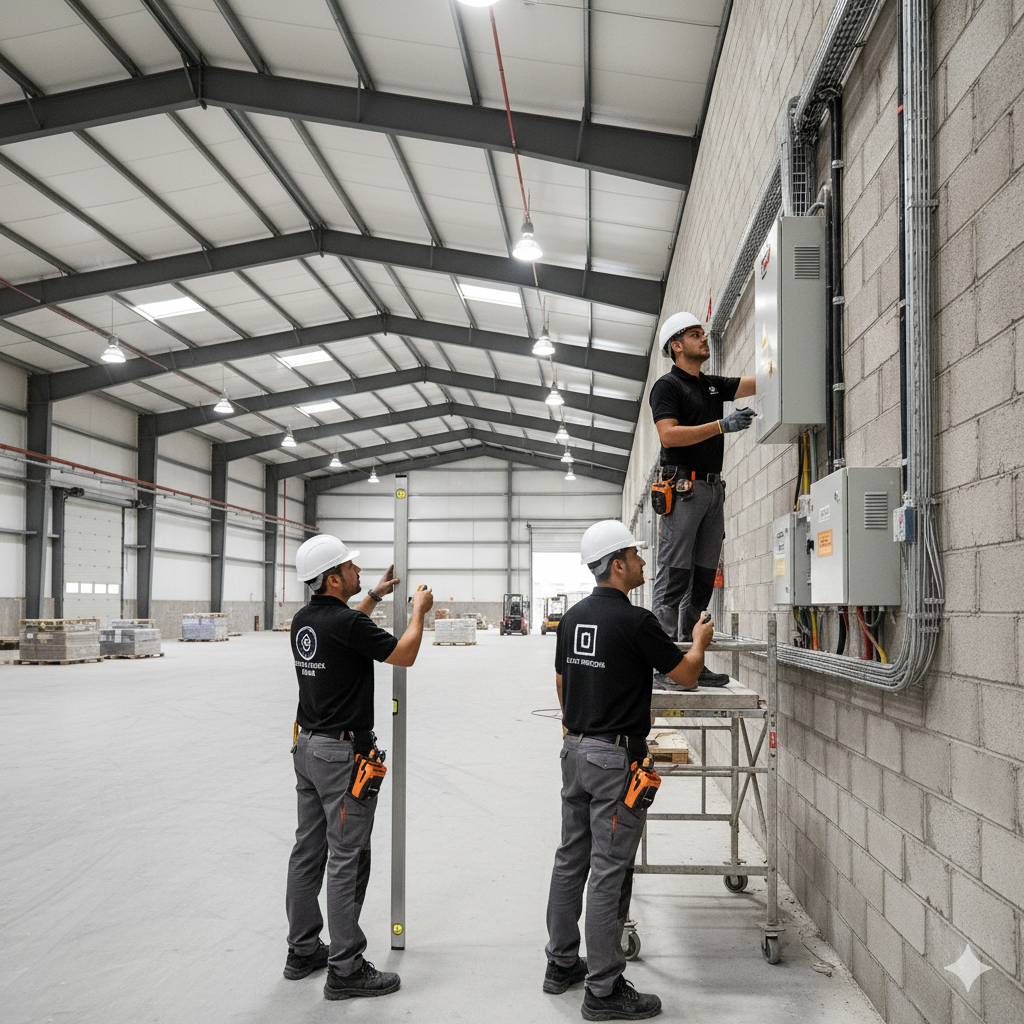
During a recent pre-handover inspection of a two-bedroom apartment in a mid-rise Dubai development, our inspector documented 23 paint and plaster defects from a total snag list of 61 items — representing 38% of the total defects found. Items included a large hollow plaster section on the master bedroom feature wall (confirmed by sounding across a 1.2m × 0.8m area), seven touch-up patches with visible colour variance across the living and dining areas, two areas of blistering paint on the external-facing bathroom wall indicating moisture beneath the film, ceiling lap marks throughout the main living area visible under overhead lighting, and uneven plaster finish on the entrance hallway wall showing visible waviness under raking light inspection.
All 23 items were included in the defect schedule presented to the developer, and remediation was completed and re-inspected before the client signed the handover documentation. The client was able to move into a property where every surface met the standard it was contracted to deliver.
Certified Inspection You Can Trust
Property Inspection Dubai is InterNACHI-certified — the world’s leading standard for property inspection professionals. Our inspectors follow international inspection protocols, produce photographic defect reports through Spectora software, and deliver reports within 24–48 hours of the inspection.
Every inspection includes a full interior finishes assessment as a standard component of our pre-handover and snagging inspection service.
Book Your Property Inspection Today
Don’t accept a property where cosmetic fixes are hiding deeper issues. Our certified inspectors document every paint defect, plaster failure, and finish irregularity — giving you the complete evidence you need to hold your developer to account.
📞 Call or WhatsApp: +971 56 378 7002
🌐 www.propertyinspectiondubai.ae
📧 info@propertyinspectiondubai.ae
Reports delivered within 24–48 hours. Inspections available across Dubai, Abu Dhabi, and Sharjah.
