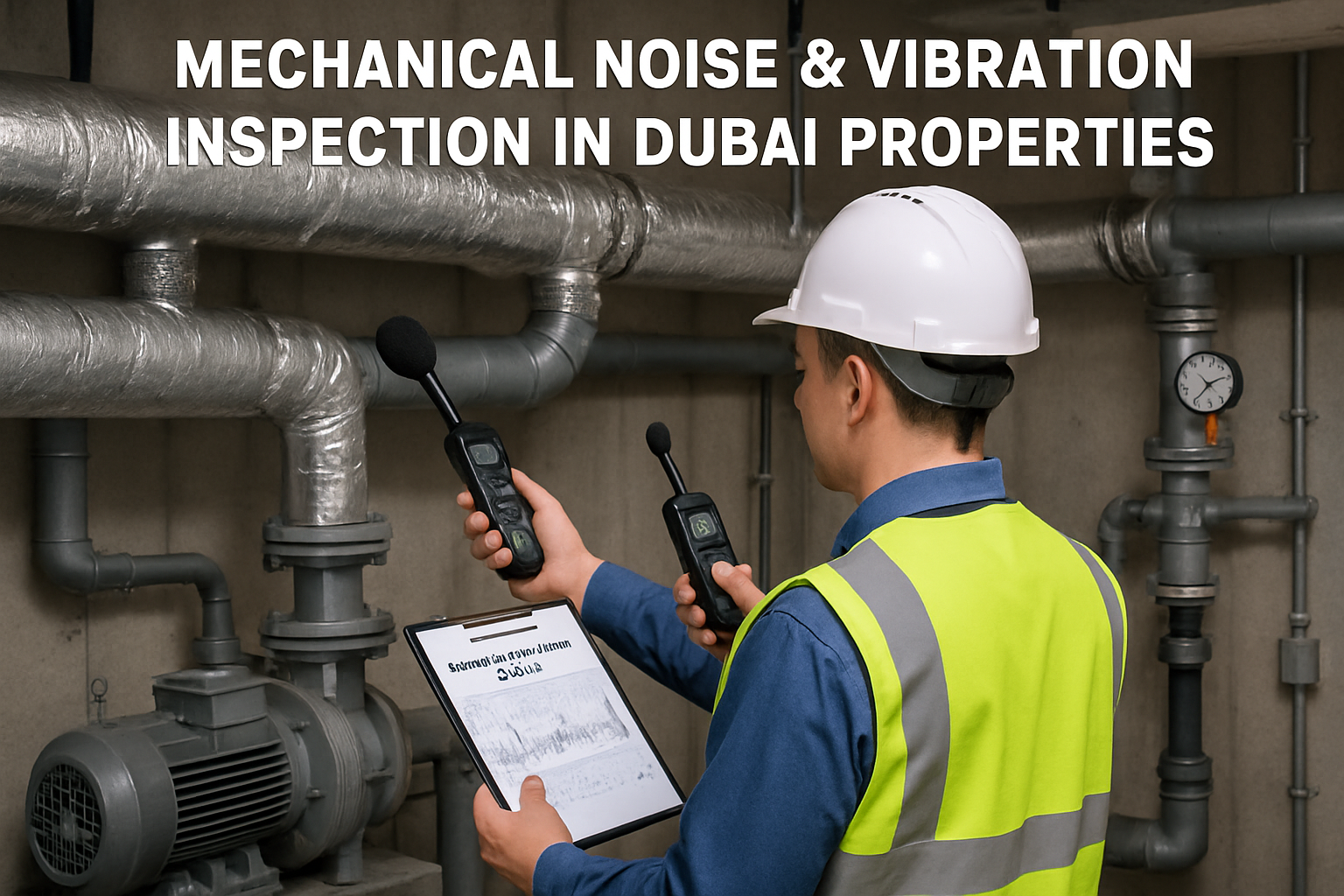
What Is Mechanical Noise and Vibration Defect in Properties?
Mechanical noise and vibration defects occur when building equipment such as AC units, pumps, or lifts transmit sound and vibration through the structure due to poor installation or missing isolation. These defects affect comfort, sleep quality, and long-term livability, even when systems appear to function normally.
Mechanical Noise & Vibration Inspection in Dubai Properties: The Silent Defect Buyers Ignore
When buyers book a property inspection in Dubai, they usually expect checks on structure, finishes, MEP systems, and visible workmanship. If the AC turns on, the lift moves, and the pumps run, most inspections mark them as “OK.”
But there is a silent defect that standard inspections almost always miss — mechanical noise and vibration.
This issue doesn’t show on walls, doesn’t trigger alarms, and doesn’t appear in basic snag lists. Yet after move-in, it becomes one of the most common sources of complaints, stress, and regret for property owners.
Mechanical noise and vibration inspection is an advanced aspect of professional property inspection — and one of the most overlooked defects in Dubai properties.
What Are Mechanical Noise & Vibration Defects?
Mechanical noise and vibration defects happen when equipment works but is installed incorrectly.
The system functions — but the building suffers.
These defects are caused by:
- Missing vibration isolators
- Rigid mounting on slabs or walls
- Poor duct or pipe connections
- Incorrect equipment placement
- Lack of acoustic separation
Unlike visible defects, these problems are felt and heard over time, not seen during a quick walkthrough.

Why This Problem Is Common in Dubai Properties
Dubai buildings rely heavily on mechanical systems due to climate conditions. Almost every property includes:
- Multiple AC units
- Water booster pumps
- Exhaust fans
- Chillers or VRF systems
- Lift motors and machinery
In fast-paced construction environments, noise and vibration control is often treated as optional, not essential.
Common Reasons These Defects Occur
- Cost cutting on vibration isolators
- Incorrect mounting brackets
- Poor coordination between trades
- Design focusing on performance, not comfort
- Rushed installation before handover
Common Sources of Noise & Vibration in Dubai Properties
1. Air Conditioning Systems
- Indoor unit vibration transferring through walls
- Outdoor units mounted directly on slabs
- Rigid duct connections without flexible joints
2. Water Pumps & Booster Systems
- Pumps mounted directly on concrete floors
- Missing rubber pads or spring isolators
- Vibration traveling through plumbing lines
3. Lifts and Lift Shafts
- Motor noise transferring into apartments
- Structural vibration through shaft walls
- Poor acoustic isolation in machine rooms
4. Exhaust & Ventilation Fans
- High-speed fans causing low-frequency noise
- Improper mounting inside ceilings
- Resonance through ductwork
Why Standard Property Inspections Miss This Defect
Most inspections answer one question:
“Is the system working?”
Mechanical noise inspection asks a different question:
“Is the system livable?”
Why It’s Missed
- Equipment operates normally
- No visible damage
- Noise may not appear during short inspections
- Requires time, awareness, and experience
- Often dismissed as “normal operational sound”
In reality, many of these noises are not normal — they are installation defects.
The Difference Between Functionality and Livability
A system can be:
- Technically functional
- Electrically compliant
- Mechanically operational
…and still be unacceptable to live with.
Real-World Examples
- AC humming through bedroom walls at night
- Pump vibration felt through floors
- Lift noise audible inside apartments
- Constant low-frequency vibration causing discomfort
These issues affect:
- Sleep quality
- Stress levels
- Concentration
- Long-term satisfaction with the property
Why Noise & Vibration Defects Get Worse Over Time
This is not a static problem.
Over time:
- Mounts loosen
- Bearings wear
- Vibration increases
- Noise becomes louder
- Structural transmission paths worsen
What starts as “minor” becomes intolerable — often after DLP expires.
Why Developers Often Say “This Is Normal”
This is one of the most common responses buyers hear.
Why?
- Noise defects are harder to measure than cracks
- There is no visual proof without expertise
- Many buyers accept it unknowingly
- Post-handover complaints increase after move-in
Professional inspection reframes this by identifying installation and isolation defects, not personal tolerance issues.
How Professional Property Inspection Identifies These Defects
Mechanical noise and vibration inspection requires experience, observation, and building knowledge.
What Professionals Look For
- Direct slab or wall mounting of equipment
- Missing rubber or spring isolators
- Rigid pipe and duct connections
- Poor equipment placement near living spaces
- Structural transmission paths
Findings are documented as installation and workmanship defects, not personal comfort complaints.
Why This Matters During Handover and DLP
Noise and vibration defects originate from:
- Installation methods
- Equipment mounting
- Missing design elements
These are construction-related issues.
When identified:
- During pre-handover
- Or within the Defects Liability Period (DLP)
Rectification responsibility lies with the developer or contractor, not the owner.
After DLP, corrections can be expensive and invasive.
Who Should Be Most Concerned?
This inspection is especially important for:
- Apartments near pump rooms or lift shafts
- Bedrooms sharing walls with AC units
- Villas with roof-mounted equipment
- Luxury properties where comfort is critical
- Buyers sensitive to noise or vibration
Final Thoughts: The Defect You Feel, Not See
Mechanical noise and vibration defects don’t appear in photos, drawings, or handover documents — but they define daily living experience.
A property can be structurally sound, beautifully finished, and still be uncomfortable to live in.
True professional property inspection doesn’t just check if systems work — it checks if the property is fit to live in.
Ignoring noise and vibration is accepting a problem you’ll live with every day.
