Hidden Water Leaks in New Homes: How Inspectors Detect Them
Buying a brand-new property in Dubai often gives homeowners a sense of security, as new developments are expected to meet modern construction standards. However, even newly built villas and apartments can contain hidden defects, including concealed water leaks that may not be immediately visible.
Hidden leaks can cause serious problems over time, including structural damage, mold growth, paint deterioration, and electrical hazards. Because these leaks often occur inside walls, ceilings, or under flooring, they can remain undetected for months if the property is not inspected properly.
This is why professional property inspection is essential before property handover. Inspectors use advanced techniques and specialized tools to identify hidden water leaks before they become major problems.
What Are Hidden Water Leaks?
Hidden water leaks are leaks that occur in areas that are not immediately visible, such as inside walls, beneath floors, or above ceilings.
These leaks often originate from:
- Concealed plumbing pipes
- Faulty waterproofing systems
- Poorly sealed windows
- AC drainage pipes
- Roof waterproofing defects
Because these leaks are hidden, homeowners may not notice them until visible damage begins to appear.
Why Hidden Water Leaks Are Dangerous
Water leaks that go unnoticed for long periods can cause extensive damage to a property.
Some of the risks associated with hidden water leaks include:
Structural Damage
Water can weaken walls, ceilings, and structural elements over time.
Mold and Mildew Growth
Moist environments encourage mold growth, which can affect indoor air quality.
Damage to Interior Finishing
Paint, wallpaper, wood, and drywall may deteriorate due to moisture.
Electrical Hazards
Water infiltration near electrical wiring can create serious safety risks.
Because of these risks, hidden water leaks should be identified and repaired as early as possible.
Common Sources of Hidden Water Leaks in New Homes
Even newly constructed properties may contain installation mistakes or construction defects that cause water leaks.
Some of the most common sources include:
1. Concealed Plumbing Pipe Leaks
Many modern buildings include concealed plumbing pipes installed behind walls or beneath floors.
If pipe connections are not properly installed, small leaks may occur that remain hidden for long periods.
Signs of concealed plumbing leaks may include:
- Damp walls or ceilings
- Reduced water pressure
- Water stains appearing on surfaces
Professional inspectors use specialized tools to detect these leaks.
2. Bathroom Waterproofing Failures
Bathrooms are one of the most common areas where hidden water leaks occur.
Poor waterproofing installation can allow water to penetrate walls and floors.
Common waterproofing defects include:
- Improper membrane installation
- Poor tile grout sealing
- Incorrect drainage slope
Over time, these issues may cause water damage in adjacent rooms.
3. Air Conditioning Drainage Leaks
Air conditioning systems produce condensation that must be properly drained through designated pipes.
If drainage pipes are incorrectly installed or blocked, water may accumulate and leak inside walls or ceilings.
This is a common issue discovered during property snagging inspections.
4. Balcony Waterproofing Problems
Balconies are exposed to rain and environmental conditions.
If balcony waterproofing is poorly installed, water may seep through the floor and leak into lower levels of the property.
Inspectors carefully evaluate balcony drainage slopes and waterproofing systems.
5. Window and Facade Leakage
Improper sealing around windows and exterior walls may allow rainwater to penetrate the building.
Common causes include:
- Failed silicone seals
- Poor window installation
- Cracks in exterior walls
These leaks often appear as damp patches near window frames.
How Professional Inspectors Detect Hidden Water Leaks
Hidden leaks are difficult to detect without professional inspection tools. Property inspectors use advanced technology to identify moisture problems before visible damage occurs.
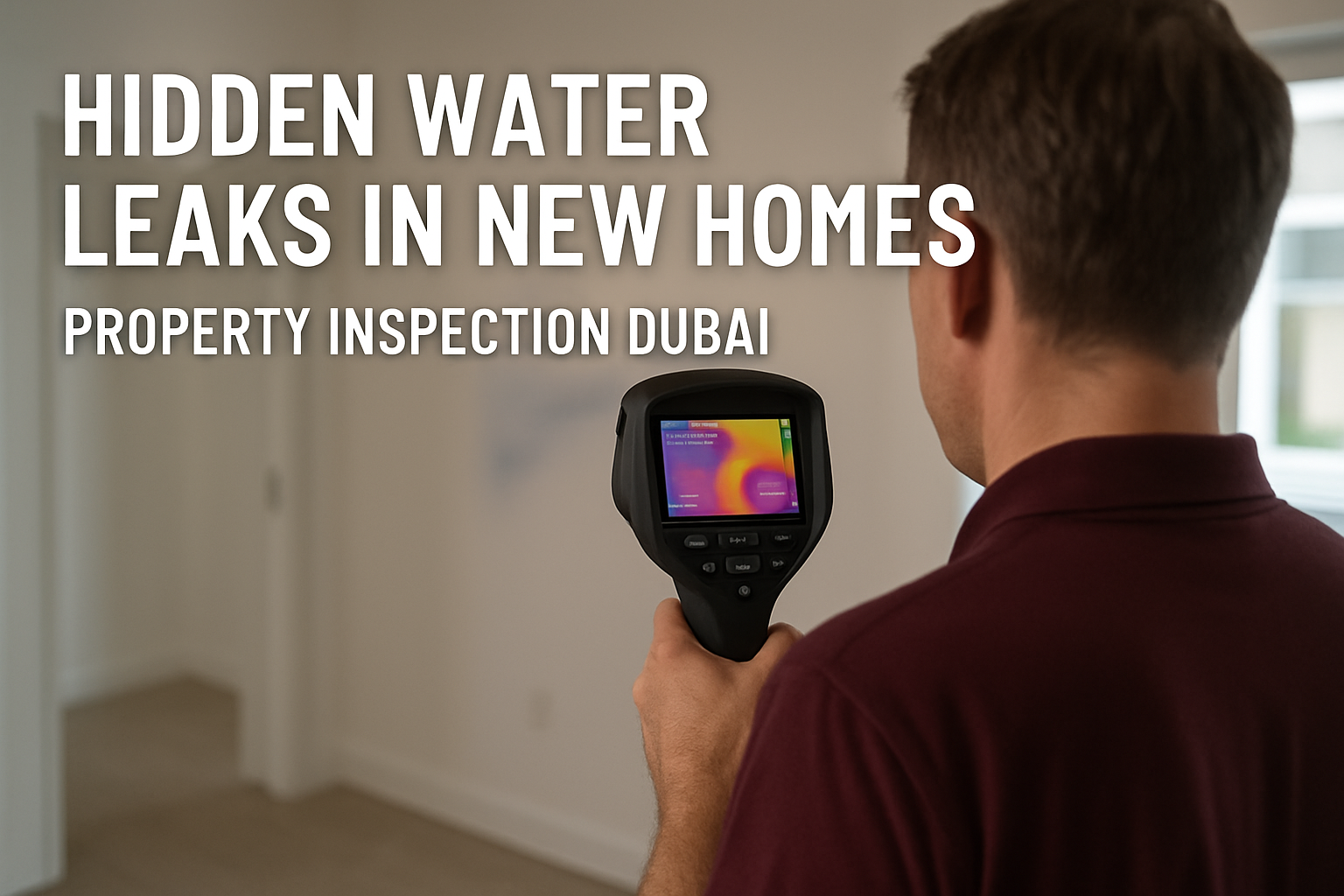
Thermal Imaging Cameras
Thermal cameras are widely used in property inspections.
These cameras detect temperature differences in walls and ceilings, helping inspectors identify areas where moisture is present.
Because water retains temperature differently than surrounding materials, thermal imaging can reveal hidden leaks behind walls.
Moisture Meters
Moisture meters measure the moisture content within building materials such as drywall, plaster, and wood.
Inspectors use these devices to confirm whether damp areas contain abnormal moisture levels.
Visual Inspection and Observation
Experienced inspectors also rely on visual observation to identify early signs of hidden leaks.
These signs may include:
- Paint discoloration
- Wall swelling
- Surface cracking
- Mold formation
Even subtle signs can indicate moisture intrusion.
Plumbing Pressure Testing
In some cases, inspectors may conduct pressure testing to determine whether plumbing systems are leaking.
Pressure testing helps identify pipe leaks that may not yet be visible.
When Should Leak Inspections Be Conducted?
Leak inspections should ideally be performed before property handover to ensure that the developer is responsible for repairing any defects.
However, leak inspections may also be conducted:
- During the Defects Liability Period (DLP)
- When unexplained dampness appears in a property
- Before purchasing a resale property
- After major renovations
Early inspection helps prevent long-term damage.
Why Property Buyers Should Never Ignore Hidden Leaks
Many homeowners ignore small signs of moisture, assuming they are temporary. However, water leaks rarely resolve on their own and often become worse over time.
Ignoring hidden leaks can lead to:
- Structural deterioration
- Expensive repair costs
- Mold-related health problems
- Electrical safety hazards
Professional inspection helps identify these issues early.
Final Thoughts
Hidden water leaks are one of the most serious defects that can occur in new homes. Because these leaks often occur inside walls or ceilings, they may remain undetected for long periods.
A professional property inspection can identify concealed leaks before they cause serious damage.
For property buyers, conducting an inspection before handover is one of the best ways to protect their investment and ensure their property is delivered in proper condition.
Property Inspection Dubai – Professional Leak Detection Experts
At Property Inspection Dubai, we specialize in detecting hidden property defects including water leaks, waterproofing failures, and plumbing problems.
Our certified inspectors use advanced inspection tools such as thermal imaging cameras and moisture meters to identify hidden leaks before they cause damage.
Our comprehensive inspection reports are delivered within 12 hours, allowing property owners to quickly address issues with developers or contractors.
We are fully certified by DED, approved by RERA, and proudly InterNACHI-accredited — providing trusted, precise, and professional snagging inspections across the UAE.
📞 Book your inspection today: +971 56 378 7002
🌐 Website: propertyinspectiondubai.ae
