What Does the Bank Actually Require?
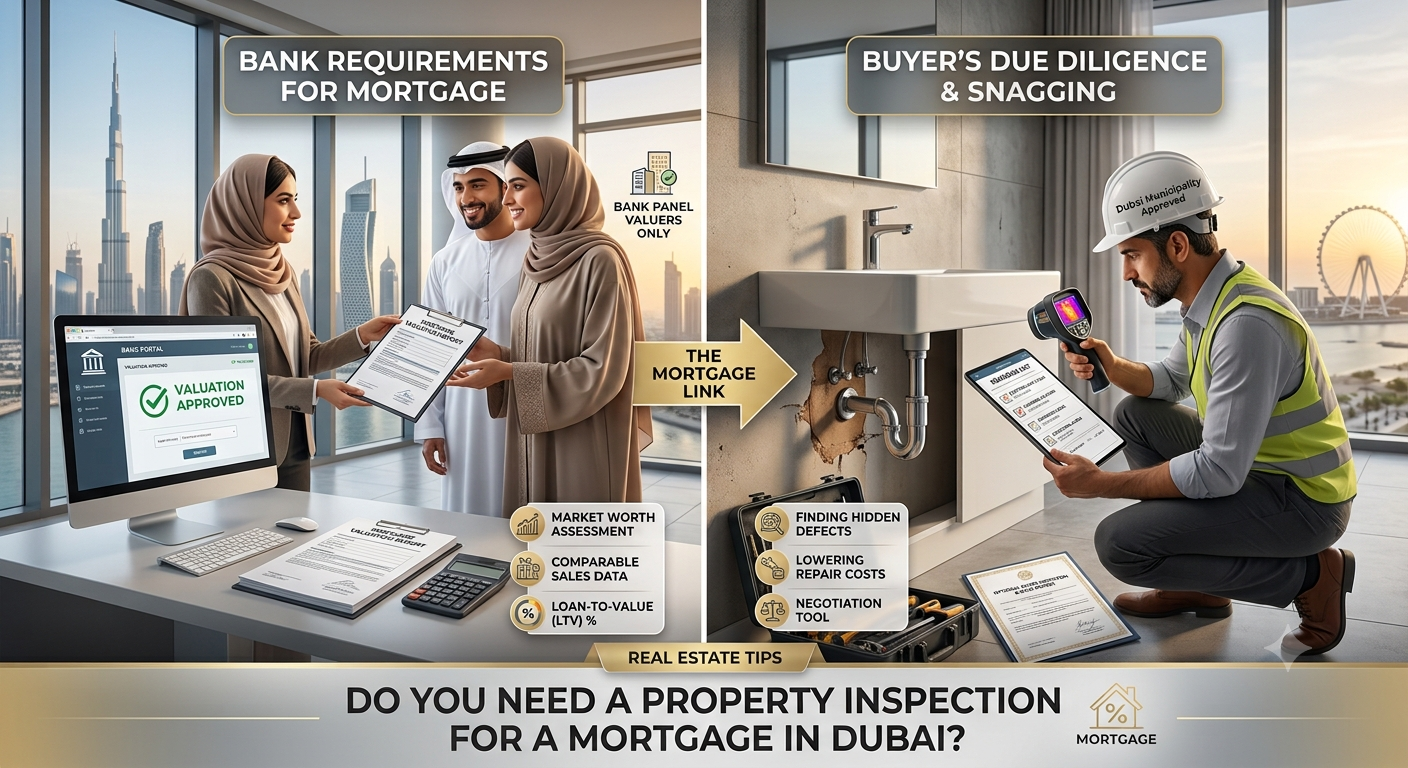
When you apply for a mortgage, most banks in Dubai will arrange for a property valuation through an approved valuation company.
The purpose of the valuation is to determine the property’s market value, helping the bank decide how much it’s willing to lend.
The valuer typically considers:
- Property size
- Location
- Building age
- Comparable property sales
- Market conditions
- General condition of the property
This protects the bank’s financial interest—not necessarily yours as the buyer.
Is a Property Valuation the Same as a Property Inspection?
Not at all.
Although both involve visiting the property, they’re designed to answer different questions.
A Property Valuation Answers:
- What is the property worth?
- Does the value support the mortgage amount?
- Is the purchase price reasonable based on the current market?
A Property Inspection Answers:
- Are there visible defects?
- Is the plumbing functioning properly?
- Are there signs of water leaks or dampness?
- Does the air conditioning appear to be operating correctly?
- Are the electrical fittings in good condition?
- Is there poor workmanship or unfinished construction?
A valuation focuses on price, while an inspection focuses on condition.
Why a Property Inspection Is Worth Considering
Even a property that looks perfect during a viewing can have hidden issues.
Some common defects found during inspections include:
- Water leaks behind walls
- Faulty electrical outlets
- Loose tiles
- Poor silicone sealing in bathrooms
- AC performance issues
- Plumbing defects
- Cracked ceilings
- Damaged doors and windows
- Incomplete finishing work
Many of these problems aren’t obvious during a short visit, especially in a furnished property.
Discovering them before completing the purchase can save you from unexpected repair costs later.
What Happens If Problems Are Found?
If an inspection identifies defects, you’ll have a better understanding of the property’s condition before moving forward.
Depending on the situation, you may choose to:
- Ask the seller to carry out repairs.
- Request a price adjustment.
- Plan for future maintenance costs.
- Decide whether the property is still the right investment.
Having clear information allows you to make a more informed decision.
What About Brand-New Properties?

Many buyers assume a newly built apartment or villa won’t have any issues.
In reality, even new properties can have defects such as:
- Paint imperfections
- Hollow floor tiles
- Poorly fitted doors
- Plumbing leaks
- Faulty switches or sockets
- Incomplete sealant
- Air conditioning issues
- Drainage problems
This is why many homeowners arrange a snagging inspection before accepting handover from the developer.
What Does a Property Inspection Usually Cover?
A professional property inspection typically includes a visual assessment of accessible areas, such as:
- Walls and ceilings
- Floors and finishes
- Doors and windows
- Bathrooms and kitchens
- Plumbing fixtures
- Electrical outlets and switches
- Air conditioning systems
- Visible moisture or water damage
- General workmanship
- Exterior areas (where applicable)
After the inspection, you’ll usually receive a detailed report with photographs and observations.
Does the Mortgage Lender Require an Inspection?
In most cases, no.
Banks generally require a valuation but don’t require a separate property inspection.
However, choosing to arrange one yourself is often a sensible step—especially if you’re making a significant financial commitment.
Think of it this way: a mortgage may last 20 or 25 years, while an inspection could help you identify issues before they become costly surprises.
When Should You Schedule the Inspection?
The best time is before the purchase is finalized or, for a new property, before the official handover.
This gives you the opportunity to:
- Understand the property’s condition.
- Discuss any concerns with the seller or developer.
- Make informed decisions before taking ownership.
Waiting until after you’ve moved in may leave you responsible for repairs that could have been identified earlier.
Final Thoughts
If you’re getting a mortgage in Dubai, remember that the bank’s valuation is designed to assess the property’s value—not to uncover defects.
A professional property inspection complements the valuation by giving you a clearer picture of the home’s overall condition. Whether you’re buying a new apartment, a resale villa, or an investment property, understanding what you’re purchasing can help you avoid unexpected repair costs and make your investment with greater confidence.
After all, buying a home isn’t just about securing a loan—it’s about making sure the property is worth living in.
