Building Snagging Equipment Explained: How Modern Technology Finds Hidden Property Defects
Introduction
Buying a property is one of the biggest financial decisions you will ever make. Whether it’s a newly constructed apartment, a luxury villa, or a commercial building, not every defect is visible during a standard walkthrough. Hidden leaks, poor workmanship, electrical issues, and structural imperfections can remain unnoticed until they become expensive problems.
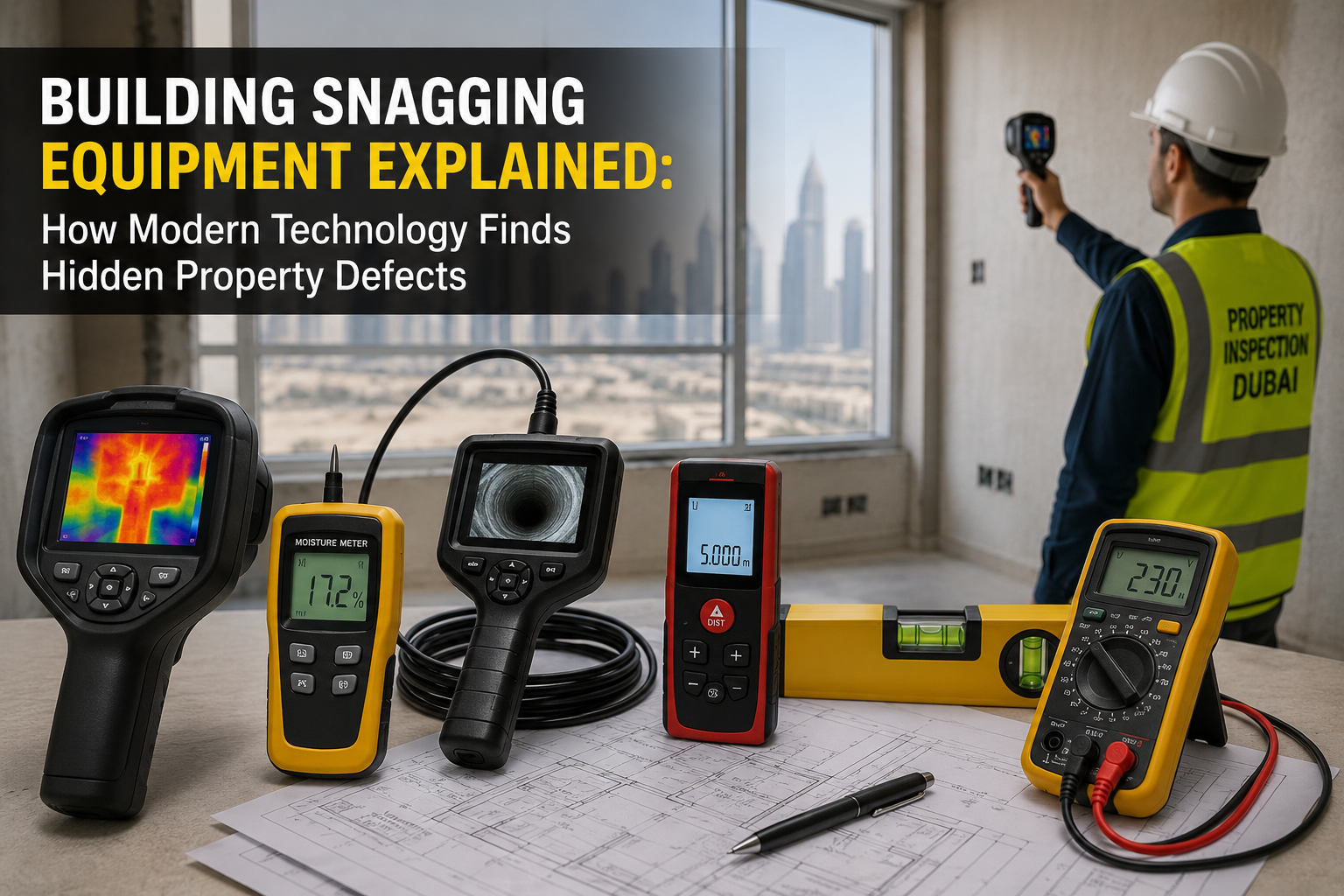
This is where professional property inspections make the difference. Modern inspection technology enables certified inspectors to identify hidden defects without causing damage to the property. By using specialized building snagging equipment, inspectors can assess the overall condition of a property with greater accuracy and provide reliable information to buyers, investors, property owners, and developers.
At Property Inspection Dubai, advanced inspection tools are used alongside engineering expertise to deliver comprehensive property inspection reports that help clients make informed decisions before purchase, handover, or maintenance.
Why Modern Inspection Equipment Matters
A visual inspection can identify obvious defects such as cracked tiles or damaged paint, but many serious issues are concealed behind finished surfaces.
Professional inspection equipment allows engineers to:
- Detect hidden moisture and water leaks
- Locate insulation deficiencies
- Identify electrical safety concerns
- Verify construction quality
- Measure floor and wall alignment
- Assess HVAC performance
- Produce accurate inspection reports with supporting evidence
Using modern technology improves inspection accuracy while reducing the risk of costly repairs after taking ownership.
Thermal Imaging Cameras
Thermal imaging cameras are among the most valuable tools used during professional property inspections.
Instead of capturing visible light, thermal cameras detect variations in surface temperature, allowing inspectors to identify hidden problems without opening walls or ceilings.
Thermal imaging can reveal:
- Water leaks behind walls
- Moisture intrusion
- Missing insulation
- Air leakage around windows and doors
- Overheating electrical components
- Air conditioning performance issues
- Roof waterproofing defects
These thermal images provide valuable evidence that supports inspection findings and helps contractors locate the source of problems more efficiently.
Digital Moisture Meters
Moisture is one of the leading causes of property deterioration. Even when walls appear dry, excessive moisture may already be affecting the building materials.
Digital moisture meters measure moisture levels inside:
- Concrete walls
- Gypsum partitions
- Timber
- Flooring
- Plaster
- Ceiling finishes
Early moisture detection helps prevent:
- Mould growth
- Paint peeling
- Timber decay
- Flooring damage
- Long-term structural deterioration
Accurate moisture readings also assist in confirming whether repairs have been completed successfully.
Borescope Inspection Cameras
Many parts of a building are inaccessible without removing finishes.
A borescope inspection camera allows engineers to inspect concealed spaces through very small openings, minimizing disruption to the property.
Typical inspection areas include:
- Wall cavities
- Ceiling voids
- Service ducts
- Plumbing chases
- Mechanical spaces
- Behind cabinetry
This technology enables inspectors to verify workmanship and identify concealed defects while avoiding unnecessary damage.
Laser Distance Meters
Construction accuracy is essential for ensuring that completed buildings comply with approved plans and design specifications.
Laser distance meters provide precise measurements for:
- Room dimensions
- Ceiling heights
- Door openings
- Window sizes
- Balcony areas
- Corridor widths
Accurate measurements help identify inconsistencies that may affect usability, compliance, or property value.
Digital Levels
Uneven floors, sloping balconies, and poorly aligned fixtures are common issues identified during inspections.
Digital levels are used to assess:
- Floor flatness
- Wall alignment
- Door frame installation
- Window installation
- Kitchen countertops
- Bathroom fixtures
- Balcony drainage slopes
These measurements help determine whether construction meets acceptable quality standards.
Electrical Testing Equipment
Electrical systems should always be inspected before a property changes ownership or reaches final handover.
Professional electrical testing equipment helps inspectors evaluate:
- Socket polarity
- Earthing continuity
- Circuit protection
- Residual Current Device (RCD) functionality
- Distribution boards
- Power outlets
- Switch operation
Identifying electrical defects early contributes to both occupant safety and long-term system reliability.
HVAC Performance Testing
Comfort inside any property depends heavily on the performance of its heating, ventilation, and air conditioning systems.
Inspection equipment is used to measure:
- Air conditioning supply temperature
- Airflow volume
- Vent performance
- Cooling efficiency
- Temperature consistency
These assessments help identify blocked ducts, poor balancing, installation defects, and equipment issues before occupants move in.
Crack Measurement Tools
Cracks can range from harmless cosmetic imperfections to indicators of structural movement.
Professional crack measuring tools allow inspectors to:
- Measure crack width
- Record crack location
- Monitor movement over time
- Differentiate structural concerns from surface defects
Detailed documentation helps property owners understand the severity of each issue and plan appropriate repairs.
Benefits of Modern Building Snagging Equipment
Using advanced inspection technology offers several important advantages:
- Improved defect detection
- More accurate inspection reports
- Non-destructive testing methods
- Faster identification of hidden issues
- Better documentation with photographs and measurements
- Increased confidence for buyers and investors
- Reduced long-term maintenance costs
Modern equipment supports objective, evidence-based inspections that provide a clearer picture of a property’s overall condition.
Why Choose Property Inspection Dubai?
At Property Inspection Dubai, every inspection combines qualified engineering expertise with professional inspection technology to deliver reliable and detailed assessments.
Our inspections cover:
- Structural components
- Architectural finishes
- Electrical systems
- Plumbing installations
- HVAC systems
- Roofs
- Basements
- External areas
- Common areas
- General building condition
Each inspection includes detailed findings, supporting photographs, and practical recommendations to help clients understand the condition of their property before making important decisions.
Conclusion
Modern building snagging equipment has transformed the way property inspections are carried out. Technologies such as thermal imaging cameras, moisture meters, borescopes, laser measuring devices, electrical testing equipment, and digital levels enable inspectors to uncover hidden defects that traditional visual inspections often miss.
Whether you are buying a home, investing in commercial property, preparing for handover, or conducting a routine condition assessment, choosing a professional inspection backed by advanced technology can save significant time, money, and future repair costs.
A comprehensive property inspection provides valuable insight into the true condition of a building, helping owners and buyers make informed decisions with confidence.
