Nevertheless, the black stains reappear about two weeks after cleaning the bathroom ceiling. Indeed, does that sound familiar? However, mold in an apartment in Dubai is a frequent complaint that hardly disappears with bleach and a sponge.
Indeed, the explanation is straightforward. Furthermore, mold is not the issue; rather, it is a symptom. Mold grows wherever there is moisture, and it will keep coming back until you figure out where the moisture is coming from.
This tutorial explains why mold is so prevalent in apartments in the United Arab Emirates, how to identify its true cause, and when to schedule a professional mold inspection. It is intended for first-time purchasers and renters as well as landlords and agents who deal with these problems on a weekly basis.
Why Mold Is So Common in UAE Apartments
It seems strange that a desert country has a mold problem, but the conditions inside many apartments are close to perfect for it.
- However, substantial temperature differences occur. Outside it can be 45°C and humid. Inside, the AC keeps rooms at 22°C. Where warm, moist air meets a cold surface, such as a duct, a ceiling void or a window frame, it turns into water. That’s condensation, and it’s the number one cause of mold we see.
- Coastal humidity. Areas near the sea, like Dubai Marina, JBR, Al Reem Island in Abu Dhabi or Al Marjan Island in Ras Al Khaimah, have high humidity for much of the year, especially in late summer.
- Sealed homes. Windows stay shut for months to keep the cool air in. Without fresh air, moisture from showers, cooking and laundry has nowhere to go.
- Hidden plumbing and AC lines. Most pipes and condensate drains run inside ceilings and walls. A small drip can soak gypsum board for months before anyone notices.
- Build quality. Poor insulation on AC ducts, failed bathroom waterproofing or missing sealant around windows can let moisture build up from day one.
Signs You Have a Mold Problem
Some mold is obvious. Some is hiding behind a wardrobe or above a false ceiling. Watch for these signs:
- Black, green or gray spots on ceilings, walls, grout or silicone
- A musty, earthy smell, especially when the AC first turns on
- Paint bubbling, peeling or turning yellow
- Brown water stains on the ceiling
- Damp or warped skirting boards and wardrobe backs
- Family members with a blocked nose, itchy eyes or coughing that improves when they leave home
Black mold on the ceiling in Dubai: what it usually means
Black mold on the ceiling in Dubai apartments almost always points to one of three things: a leaking or sweating AC duct above the ceiling, a slow leak from the bathroom or apartment upstairs, or condensation in a bathroom with a weak exhaust fan. The pattern helps. A ring of spots around an AC grille suggests duct condensation. A spreading stain with a brown edge suggests a water leak. Spots across the whole bathroom ceiling usually mean poor ventilation.
If anyone in the home has asthma, allergies or a weak immune system, take mold seriously and speak to a doctor about symptoms.
How to Find the Source of Mold: Step by Step
You don’t need special tools to start. These steps will often narrow it down before you call anyone.
- Map where the mold is. Take photos and note every spot. Is it near an AC grille, a bathroom, a window or an outside wall? Is it on the ceiling, the wall or near the floor?
- Check timing. Does it get worse in summer, after heavy use of the shower, or after rain? Summer and AC use point to condensation. Rain points to the building envelope. Showers point to ventilation or waterproofing.
- Look at the AC. Remove the grille and look for water drops, rust or black dust inside. Check that the condensate drain isn’t blocked. Water dripping from the unit is a strong clue.
- Test the bathroom fan. Hold a sheet of tissue paper to the exhaust grille. If it doesn’t pull the tissue in, the fan isn’t doing its job.
- Check the water meter. Turn off every tap and appliance and watch the meter for 30 minutes. If it moves, there’s a leak somewhere in your plumbing.
- Ask upstairs. Many ceiling stains in apartments start in the unit above. A quick word with the neighbor or the building management can save a lot of guessing.
- Check humidity. A cheap hygrometer shows indoor humidity. Above 60% for long periods is enough for mold to grow.
If you’ve done all this and still can’t find the cause, or if the mold keeps returning after cleaning, the source is probably hidden inside a wall or ceiling. That’s when a professional mold inspection is worth it.
Common Mold Sources, Room by Room
| Room | Where mold shows | Most likely source |
| Bathroom | Ceiling, grout, silicone around the shower | Weak exhaust fan, failed waterproofing, leak from the unit above |
| Bedroom | Ceiling around the AC grille, behind wardrobes | Uninsulated or sweating AC duct, poor airflow behind furniture |
| Kitchen | Under the sink, behind appliances | Leaking waste pipe or tap connection, dishwasher hose |
| Living room | Corners of outside walls, around windows | Condensation on cold walls, rain getting in through window seals |
| Utility or laundry | Walls and ceiling | Dryer moisture, washing machine leaks, no ventilation |
| AC cupboard | Around the FCU and drain tray | Blocked condensate drain, overflowing tray |
In our experience, the AC system is behind more mold in apartments Dubai than anything else. Ducts that aren’t properly insulated sweat every time the cold air runs through them, and the water soaks straight into the gypsum ceiling.
What a Professional Mold Inspection in Dubai Includes
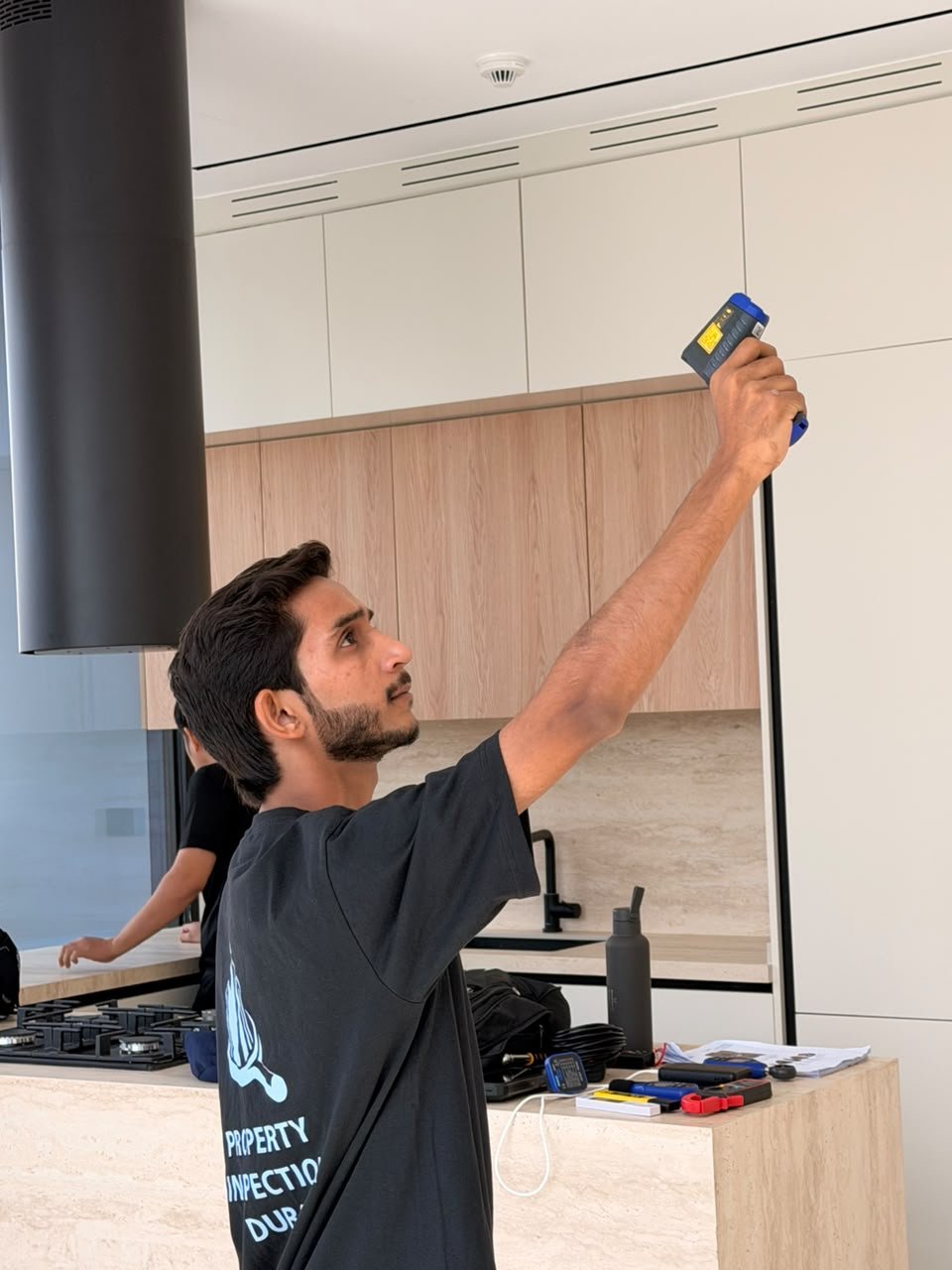
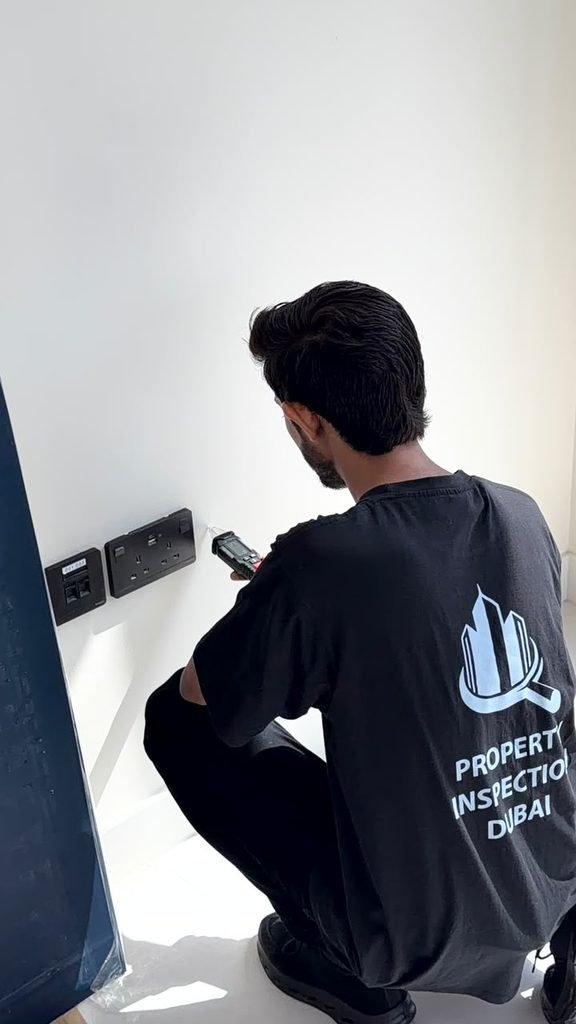
A proper mold inspection in Dubai goes beyond looking at the stains. The goal is to find the moisture source, measure how far the damage has spread, and give you a clear plan to fix it. Here’s what our inspectors at Property Inspection Dubai usually do:
- Visual check of every room, including inside AC cupboards, above access panels and behind fixed furniture where possible
- Thermal imaging to spot cold, damp areas inside ceilings and walls without breaking them open
- Moisture meter readings to confirm which surfaces are actually wet, and how wet
- Humidity and temperature readings in each room to show where condensation is likely
- AC system check, covering duct insulation, drain lines, drip trays and airflow
- Plumbing and wet-area check, including shower slopes, silicone, waterproofing and pipe joints
- A written report with photos, readings, the likely cause and recommended repairs
This matters for landlords and tenants too. A report with readings and photos makes it much easier to agree on who is responsible for the repair.
If you’re moving into a new or rented home, mold checks can be added to a full apartment inspection or a move-in inspection, so you know about any problem before you sign.
Mold Removal in Dubai: Fix the Cause First
Many people search for mold removal in Dubai and book a cleaning service straight away. Cleaning helps, but if the moisture source is still there, you’re paying for the same job again in a few weeks.
The right order is:
- Find the source. Use the steps above, or a professional inspection if it’s hidden.
- Fix the moisture. Insulate or repair the AC duct, clear the drain, fix the leak, redo the waterproofing or improve ventilation.
- Dry the area. Wet gypsum and wood need to dry fully before any repair.
- Remove the mold. Small surface patches can be cleaned with a proper mold cleaner. Badly affected gypsum board, insulation or wood should be cut out and replaced, not painted over.
- Check again. A follow-up moisture reading a few weeks later confirms the problem is really gone.
Simple habits that keep mold away
- Run the bathroom fan during showers and for 15 minutes after
- Keep indoor humidity between 40% and 60%
- Don’t push wardrobes and sofas tight against outside walls
- Have the AC serviced and the drain lines cleaned at least once a year, ideally before summer
- Open windows on cooler days, roughly November to March, to let fresh air in
- Report leaks from upstairs to building management straight away
Advice for Tenants, Landlords, Agents and Buyers
Tenants
Take dated photos as soon as you notice mold, and report it to your landlord or building management in writing. Don’t paint over it, because that can hide evidence of a leak that isn’t your responsibility.
Landlords and property managers
Mold left untreated leads to tenant complaints, disputes over deposits and damage to ceilings and joinery. A quick inspection between tenants catches small problems early. Our maintenance inspection is designed for exactly this.
Real estate agents
A musty smell at a viewing can kill a deal. Recommending an inspection before listing or before handover shows clients you’ve got their back, and it avoids surprises during negotiation.
Buyers
If you’re buying a resale apartment, fresh paint on a ceiling is worth asking about. Book a pre-purchase inspection with mold and moisture checks before you sign anything. For a new off-plan unit, a pre-handover inspection can catch poorly insulated AC ducts before they ever cause a problem.
Across all seven emirates
The same causes show up in Dubai, Abu Dhabi, Sharjah, Ajman, Ras Al Khaimah, Fujairah and Umm Al Quwain. Coastal towers and older buildings tend to see more mold, but we regularly find it in brand-new apartments too, usually because of AC installation faults.
Frequently Asked Questions
Why does mold keep coming back in my Dubai apartment?
Because the moisture source hasn’t been fixed. Cleaning removes the mold you can see, but if an AC duct is sweating or a pipe is leaking, it will grow back within weeks.
What causes black mold on the ceiling in Dubai?
Usually a sweating or leaking AC duct above the ceiling, a leak from the apartment upstairs, or poor bathroom ventilation.
How much does a mold inspection in Dubai cost?
It depends on the size of the apartment and how many areas are affected. Contact us for a quote based on your property.
Is mold in an apartment dangerous?
Mold can trigger allergies, asthma and breathing irritation, especially in children, older people and anyone with a weak immune system. It’s best dealt with quickly.
Who pays for mold removal in a rented apartment?
It generally depends on the cause. Building faults like leaks and AC defects are usually the landlord’s responsibility, while damage from poor ventilation habits may fall on the tenant. Check your tenancy contract, and get an inspection report if you can’t agree.
Can I find a hidden leak without breaking the wall?
Yes. Thermal imaging and moisture meters can locate most hidden moisture without any damage.
Stop Cleaning, Start Fixing
Mold in an apartment in Dubai is almost never just a cleaning problem. It’s a sign that water is getting somewhere it shouldn’t, whether that’s condensation from the AC, a hidden leak or a bathroom that can’t breathe. Find that source and fix it, and the mold stops coming back.
If you’ve tried the steps above and still can’t track it down, our InterNACHI-certified team at Property Inspection Dubai can help. We use thermal imaging and moisture testing to find the real cause, and you get a clear report you can share with your landlord, developer or contractor.
Book your mold inspection today. Call or WhatsApp +971 56 378 7002, or book an inspection online. We cover apartments and villas across all seven emirates.
