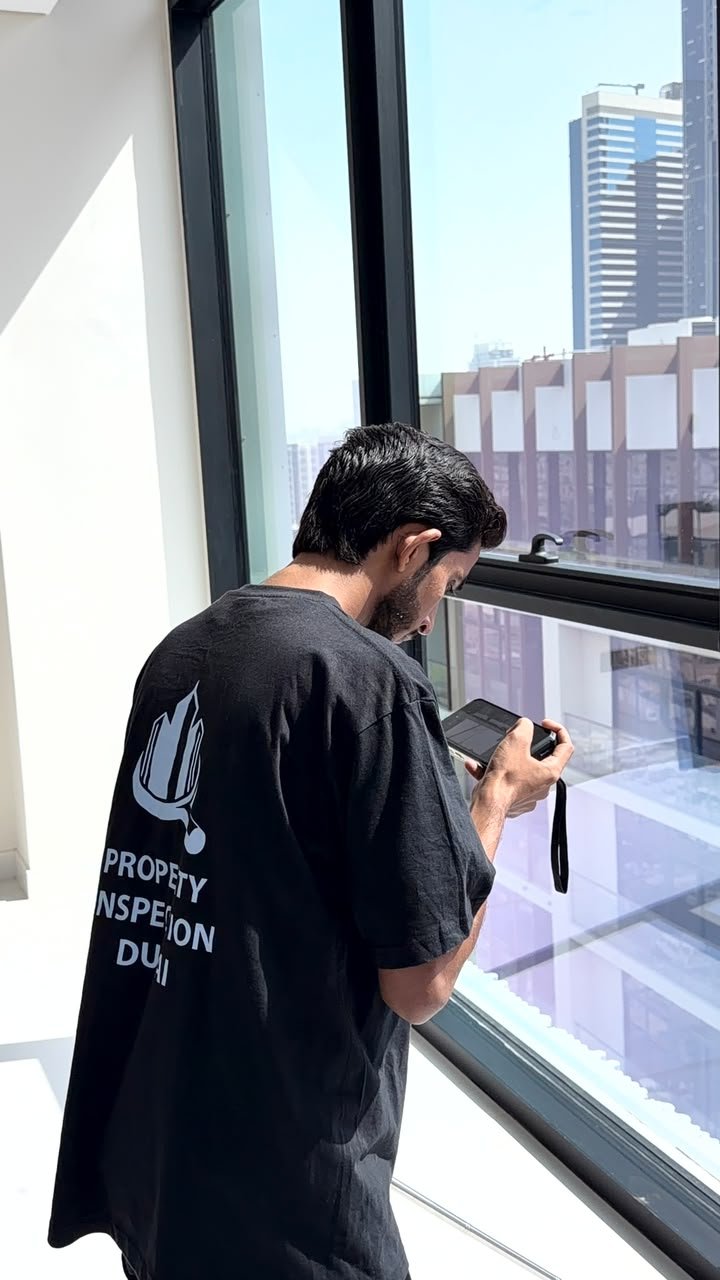
Property inspection Dubai services offer more than just checking walls, floors, doors, and plumbing. Wherever there is a villa or another building with an external visible surface, the inspection should also cover this area.
In particular, the condition of the ground surface near the building, its level relative to the floor inside, and the plinth protection should be examined. This construction element prevents surface water from flowing into the building if it is properly designed and maintained.
During snagging, this zone might be overlooked because most buyers focus their attention inside the house. Nevertheless, the state of play of the surrounding surface, its correspondence to the level of the building’s external walls, and the presence or absence of water traces can indicate other potential problems.
When inspecting a property in Dubai, it is essential to evaluate the overall condition of surrounding elements and grounds and understand what to do if some issues are found.
What Is Plinth Protection, and Why Is It Important?
To understand what plinth protection is, it is necessary to clarify what the plinth is. This building element is the lower part of the building between the level of the surrounding surface and the first floor. The design of the plinth can vary, depending on the type of structure and its construction.
Plinth protection is the protective surface near the building, made of concrete, paving, tiles, or another material. This zone is designed to prevent water from getting into the building by directing it away from the plinth. For the owner, it is vital to pay attention to the quality of the surface, its slope, possible gaps, and the state of the junction with the external walls of the building.
Poorly designed drainage or damaged plinth protection can lead to water entering the building through the lowest points. The consequences of this malfunction depend on the material of the plinth, the design of the drainage system, and the soil nearby. For example, a leak can damage the surface of the walls and lead to dampness inside the villa.
At the same time, it is impossible to say categorically that poor waterproofing caused the problem. In some cases, the cause of the damage may be land drainage, irrigation systems, or poor engineering of the plinth protection. Thus, this building detail is integral to the waterproofing system and must be properly maintained. Those interested in the topic can learn more about plinth protection and its importance in the article.
Why Plinth Protection Should Be Included in Property Snagging
When receiving a property, a buyer usually looks with interest at the state of the kitchen, bathroom, bedroom, windows, and air conditioning. However, these details are not as important as it might seem. It is vital to take a closer look at those elements during property snagging that are not visible at first glance but can affect the general condition of the villa and the integrity of its structures.
In particular, the inspection should cover the accessible area around the building. For a villa with a paved surface around it, special attention should be paid to the state of this structure. If there are cracks, broken concrete plates, or gaps between other building elements, this indicates a problem.
It is essential to find out what these defects are: minor cosmetic damage or the reason for more severe future problems. Thus, a qualified inspection service can highlight the issues that require urgent measures and those that can wait until the end of snagging or the next season.
In addition, the inspector will draw attention to the presence of dampness and the integrity of the junction of the surface around the building with the plinth. After all, these factors directly affect the waterproofing of the villa and its maintenance. Finally, a professional inspection service can compile an organized list of defects found, which will help the owner or developer in subsequent work.
Nevertheless, it is vital to understand that during an inspection, the expert cannot draw any definite conclusions about the nature of the problem based on one photograph. It is vital to consider the context in which a defect was found: the slope of the surface, the state of the drainage system, and the materials used.
What to Look at When Inspecting the Building Plinth
When inspecting the plinth, the first thing to do is to look at its state. The main attention should be paid to the integrity of the surface, the presence of cracks, and the state of the intersection with other building structures. In particular, broken concrete, gaps between paving stones, and other signs of damage should be noted.
At the same time, not all of these details mean that the plinth protection surface is defective. Some of these signs are purely aesthetic, which means that they are not critical. However, if the integrity of the surface is compromised, this may be a signal that waterproofing is faulty.
It is essential to photograph all the details found, paying attention to their location and the condition of the surfaces around them. The next step is to examine the intersection of the plinth protection with the building’s external walls. Cracks, poor-quality sealant in the joints, and the degree of overlap of one building element by another are also potential problems.
In addition, an inspector should look at the entire surface around the building, checking whether there are places where water does not flow away. Ditches, poorly laid paving stones, or a depression on the ground can be signals of poor water flow. If possible, the specialist should also look at the surface after rain or irrigation to see if there are any stagnant water spots.
Finally, the building’s external walls should be inspected for signs of dampness, peeling paint, or other defects. Many of these details are not necessarily related to the plinth, but the inspector notes them for the record. In some cases, a specialist might need to take more detailed photos of a particular problem or request a more in-depth inspection if the necessary equipment is unavailable.
Check the Slope of the Surface and Drainage Near the Building
When inspecting the surface around the building, a specialist must pay close attention to its slope and drainage. Ideally, the surface should slope away from the building to ensure that water flows away from the plinth rather than accumulating near it. Water accumulation can lead to deterioration of the integrity of the plinth and the entire building.
When inspecting surface drainage, a specialist must carefully study the available details. The slope of the surface, the presence of ditches, and the state of their gates are essential. In addition, the inspector must ensure that water does not flow where it should not. In particular, the specialist should look at the surface around the building after rain or irrigation to see how the water flows.
It is vital to understand that the quality of drainage depends not only on the slope of the surface around the building but also on the state of the land itself. Thus, irrigation systems, flower beds, and the topography of the territory must also be studied.
These details are critical for understanding why water accumulates where it does. In some cases, the problem may be in the poor design of the plinth protection. At the same time, the cause of the malfunction may be in the poor waterproofing of the villa or the integrity of the plinth itself. The same goes for the slope of the surface: the inspector must compare the available details with the project to see if there are any deviations.
Finally, the specialist must ensure that the surface drainage is compatible with the building’s internal sanitation. If the two systems are not compatible, the problem must be identified and resolved.
Understanding Code Dubai and Other Building Regulations
Code Dubai and other local regulations are essential for understanding what problems can arise during an inspection. People searching for information on this topic may come across many articles that discuss code Dubai in general or provide guidelines for a specific building detail. Although this information is helpful, it is not enough to find and describe potential problems.
A specialist who is conducting an inspection must understand that not every defect found indicates that code Dubai or another standard is violated. In particular, the inspector must compare the details found with the approved project and available requirements.
Code Dubai and similar standards are mandatory for all buildings in Dubai Municipality. Decree 45 of 2021 sets out the goals and objectives of code Dubai, which is necessary to consider when inspecting a building.
The regulation covers many topics, from the characteristics of building materials to technical and sanitary norms. However, the presence of any of the above problems does not mean that code Dubai is violated. For the most part, local regulations describe the requirements for individual building structures, taking into account their use and installation conditions.
When considering code Dubai during an inspection, a specialist must also understand the differences between code Dubai and other regulations in the UAE. Although code Dubai is part of the UAE building safety regulations, it does not apply to all emirates. The law applies only to Dubai Municipality. In turn, code Dubai does not regulate all aspects of building construction, which is why other local regulations also exist.
A potential client should keep in mind that an inspector can give advice based on code Dubai and other local regulations but cannot conduct a formal audit of compliance with code Dubai. In particular, an inspection report cannot be an official document certifying that a building meets code Dubai requirements.
How Inspection Equipment Can Help Find Visible Defects
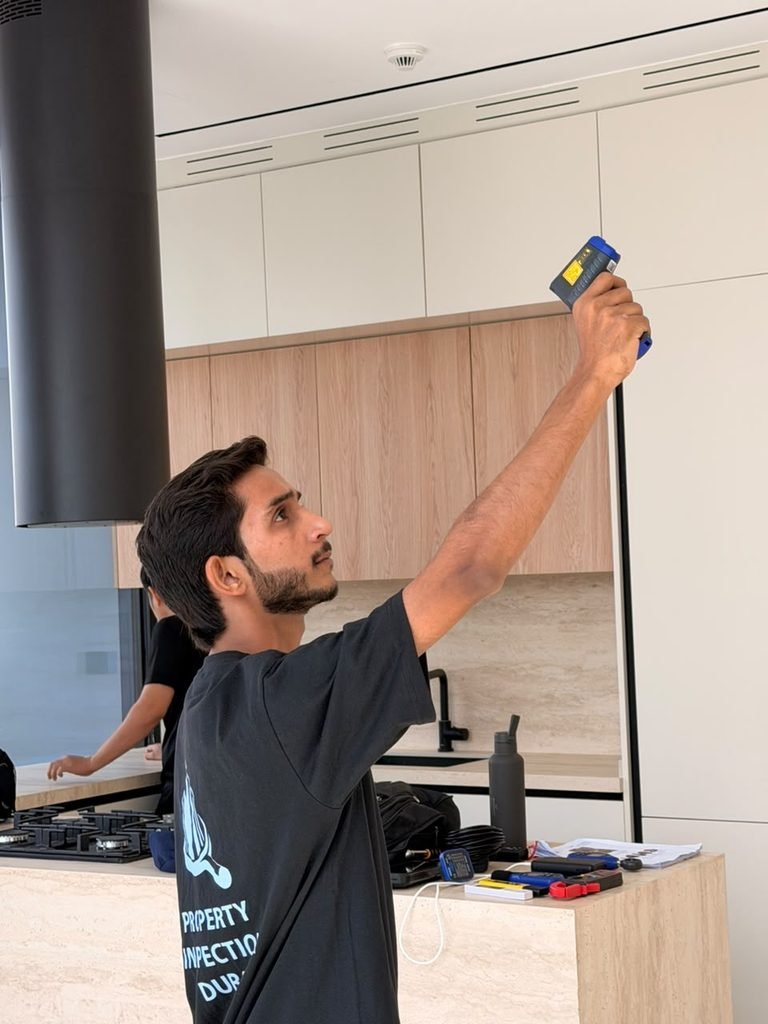
An inspector can use different equipment when inspecting the plinth, depending on the tasks at hand. In most cases, the tools for visual inspection of the plinth are the same as those for other building structures. When inspecting the plinth, a specialist must pay close attention to its integrity, which can be done with a flashlight. Using a camera, the inspector can take a photo of the entire found defect and separately — its details.
In addition, a measuring tape or other tools for measuring linear dimensions can help estimate the size of the detected problem. Finally, a spirit level or other tools for measuring the slope of the surface are needed to find out if there are any deviations.
The use of specific equipment is not always mandatory, as, for example, with moisture meters. Most often, the results of measurements with such devices cannot be used as reliable information, since the indicators depend on the type of material and the conditions of the measurement. In particular, a moisture meter will help find problem spots, but it is up to the specialist to determine their cause.
The same goes for other tools used in property inspection: they are intended to help the inspector, but they cannot replace his training and skills.
What to Put in the Snagging List for Plinth Protection
A snagging list is intended to clarify what problems were found so that the developer or contractor can fix them. Therefore, it is vital to describe the detected defect as detailed as possible instead of writing a general phrase about the presence of a problem.
Each point in the snagging list should clearly describe the detected deviation, indicating its location and possible consequences. For example, if a problem was found with the integrity of the paving stones, this should be indicated in the following manner: there was a broken paving stone found at the left extension of the garden along the external wall.’
In another case, the problem may be a water leak near the building, which is why the next entry in the snagging list should look like this: water was found near the wall after irrigation, so its drainage must be studied.’
In most cases, photographs will help the contractor understand the nature of the problem, which means that they must be attached to the snagging list. In addition to a detailed description of the problem, the date of the inspection, the place where the defect was found, and the necessary actions should be indicated.
If further study of the detected problem is required, this must also be indicated in the snagging list instead of requesting specific measures. Once the problem has been resolved, a specialist must re-inspect the site if possible and update the snagging list.
What to Put in the Property Inspection Report
A property inspection report should be understandable to any person who reads it, even if they were not present during the inspection. When compiling such a document, an inspector must describe the detected problem as detailed as possible, indicating the address and location of the defect.
In particular, the report should state which side of the building the problem was found on and describe this location. In addition, if there were any problems with water entering the building, the inspector must indicate the conditions under which this happened.
For example, the report can say something like on the day of the inspection, the area around the building after irrigation was found to be damp. It is undesirable to write in the report that the problem is due to the violation of code Dubai or any other specific regulation, since it is up to the developer to prove that the building meets all requirements.
The inspector writes the properties inspection report in clear wording, identifying the problems found. In cases where the cause of the defect is not obvious from the description, the report must additionally indicate what other actions are required to clarify the situation. If the inspector is unsure of the consequences of the detected problem, he must indicate this in the report and recommend that it be studied by a specialist.
Thus, the report should help the owner determine which of the detected problems is critical and what actions to take to eliminate them. It is vital to remember that one report is rarely enough for the developer to take action, which means that the more details are provided, the faster the problem will be resolved.
When to Arrange a Property Check in Dubai
A property inspection can be beneficial to an owner in several cases, from the developer’s handover of the property to its purchase by the new owner. In particular, a pre-handover inspection usually focuses on finding defects that must be eliminated before the owner takes possession of the property.
When inspecting a property, the owner should pay attention to the state of the plinth protection and study the available drainage. If the inspector finds signs of deterioration of the surface around the building, this indicates potential problems with water entering the building.
Thus, the property inspection Dubai service can also be used to study the external structures of the villa. In all cases, the inspector must consider the age of the building and the nature of the problem. If there are concerns about structural deformations, a property inspection is essential, since a visual inspection cannot detect them. Therefore, the earlier the potential problem is found, the less expensive and time-consuming its elimination will be.
In addition, the owner must remember that it is always a good idea to photograph the found defect to monitor its progress over time. This will help determine whether the situation requires emergency measures.
Common Mistakes to Avoid When Inspecting Plinth Protection
One of the most common mistakes when inspecting the plinth is the search for cracks, while the problems can be in the integrity of the surface or slope and the poor state of drainage. In addition, an inspector must remember that not every leak indicates a violation of code Dubai or other local standards. If not for the proper waterproofing of the building and the plinth, water will get inside regardless of the state of the plinth protection.
Finally, a potential owner should not try to hide the detected defect by repairing the integrity of the surface around the building. This might seem like a quick solution, but it only conceals the problem, and the consequences can be much more severe than expected. Moreover, if the owner does not have the expertise and equipment, he should not try to analyze the situation on his own.
Conclusion
Plinth protection may seem like a minor detail of a building, but it can indicate many potential problems with water entering the building. The integrity of the surface around the building, its slope, and the state of the joint with the plinth are essential for the waterproofing of the villa and the study of these details during the inspection.
For the owner, the task of property inspection in this place is relatively simple: to study, where possible, the accessible areas around the building, photograph all the details, and describe the problems found. With these details, the owner will be able to find out what further steps to take to eliminate the detected defects. In particular, a specialist will advise which tools to use for the inspection, which of the found problems requires further study, and what steps to take to eliminate the consequences of the detected defect.
